PURPOSE: The Chinese Language Day at U.N. celebrates multilingualism and cultural diversity as well as to promote the use of Chinese. The date of April 20th as the U.N. Chinese Day was selected to pay tribute to Cangjie. Cangjie is a very important figure in ancient China, claimed to be an official historian of the Yellow Emperor and the inventor of Chinese characters. Chinese was established as an official language of the United Nations in 1946. However, in early years, Chinese was not commonly used in the work of the United Nations. The situation was improved after restoration of the lawful rights of the People's Republic of China in the United Nations in 1971. All the United Nations offices and staff members work in Chinese language.
FORUM: "Celebrating the day Guyu in honor of Cangjie." Chinese language Day 2026. The date for the Chinese day was selected from Guyu ("Rain of Millet"), which is the 6th of 24 solar terms in the traditional East Asian calendars, to pay tribute to Cangjie. The celebration aims to promote the richness of the Chinese language and culture, while highlighting the contributions of Chinese language professionals within the UN system. The UN has six official languages: Arabic, Chinese, English, French, Russian and Spanish. To highlight linguistic and cultural diversity and promote the equal use of these languages, the UN Department of Global Communications launched UN Language Days in 2010. It designated April 20th — coinciding with Grain Rain in the traditional Chinese calendar — as Chinese Language Day, in honor of Cangjie, the "ancestor of Chinese characters." In addition, special lectures and cultural experience activities will be held to further promote exchanges and mutual learning between the Chinese language and the world's diverse cultures, the UN announced. Follow the conversations with the hashtags:#learnChinese, #chineselanguageday, #20April, #Chineselanguage.
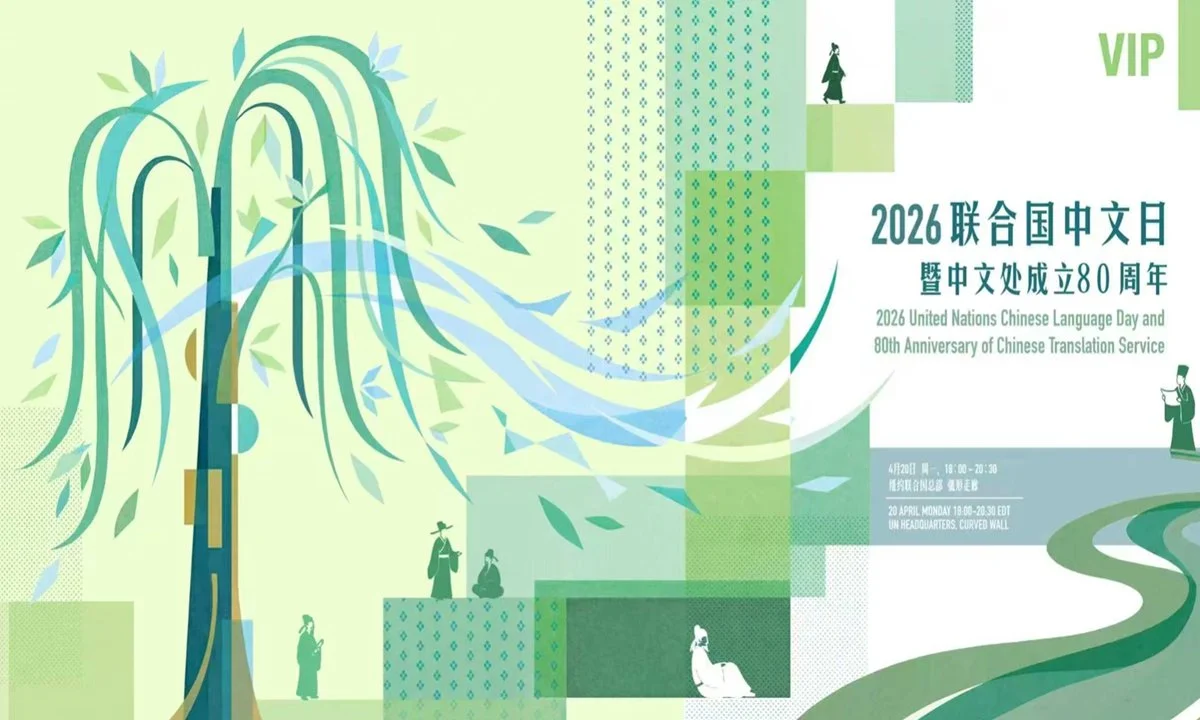
EVENTS: On April 20th, 2026, from 18:00pm to 20:30pm, New York time at the Curved Wall in the United Nations Headquarters, the 2026 observance of the United Nations Chinese Language Day and the celebration of the 80th Anniversary of Chinese Translation Service will be held. Register to participate!
At UNHQ in New York, On April 20th; The Chinese Book Club Language Day will consist of three segments: a short Chinese music performance, a talk and a round-table discussion. During the roundtable, the young Chinese creators will share their insights with the audience. Following by the 24 Solar Terms: Fifth Great Invention of Ancient China and an Exhibition. The events to mark the Chinese language Day 2026 observance will be co-hosted by the United Nations General Assembly, the United Nations Security Council, The Permanent Mission of the People's Republic of China to the U.N.; The Department of Public Information, the Department of General Assembly Conferences and Meetings (DGACM); The United Nations Interpreters, the United Nations Multimedia, the United Nations Radio. With the participation of the U.N. Member states, Specialized agencies, translators and academics.
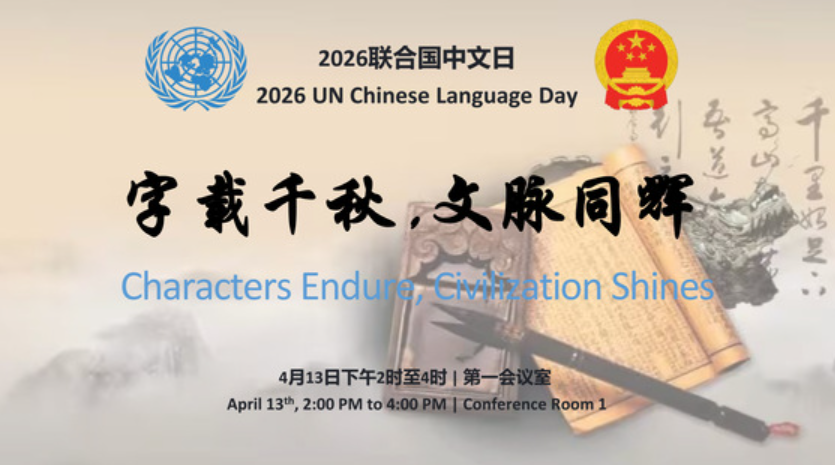
A series of cultural events have been held in multiple locations worldwide to mark the 2026 United Nations Chinese Language Day.
On Monday, a special celebration commemorating both the Chinese Language Day and the 80th anniversary of the Chinese Language Service will be held at the United Nations Headquarters. The celebration, jointly organized by the Chinese Book Club at the UN, the Chinese Translation Service, and the Chinese Language Teaching Unit, will be held in the Delegates Entrance Hall. Activities will include guided exhibition tours, cultural performances, and interactive experiences showcasing elements of China's intangible cultural heritage.
In recent days, various locations around the world have held vibrant celebrations to mark this year's UN Chinese Language Day. According to the Xinhua News Agency, in Warsaw, Poland, nearly 200 Chinese and Polish students gathered at SWPS University for performances and exchanges under the theme of cultural exchange between China and the West. In Sofia, Bulgaria, the Confucius Institute organized a Chinese singing contest and inaugurated a peony culture center on Saturday local time. In Addis Ababa, Ethiopia, and Lusaka, Zambia, universities and Confucius Institutes also presented songs, dances, and cultural performances to highlight the growing global appeal of the Chinese language. Similar events in Nairobi, Kenya, and Rio de Janeiro, Brazil, emphasized dialogue among civilizations and the role of Chinese in sparking colorful dreams.
Earlier, a celebration titled ‘‘Chinese Language Shining Civilizations’’ was held at the UN headquarters in New York to mark the UN Chinese Language Day. At the end of its report, the UN noted that in today's world, where globalization and digitalization are deeply intertwined, Chinese is continuously gaining new vitality. At the intersection of technological empowerment and cultural heritage, the Chinese language not only connects the past with the future, but also facilitates communication among civilizations and contributes to a new chapter of multilateralism, the report said.
Wang Deyan, director of the Chinese Language Department at the School of Liberal Arts and Law of North China University of Technology, expressed support. He told the Global Times on Sunday that the widespread global celebrations of UN Chinese Language Day highlight the status of Chinese as an official global language and reflect the growing influence of the Chinese language and culture. Mr. Wang further noted that the Chinese Language Day is not only a celebration of language and culture, but also an important example of China promoting exchanges and mutual learning among civilizations, participating in global cultural governance, and contributing to a more just and inclusive international order. Amid profound global changes unseen in a century, cultural connection through language is more enduring than confrontation and division. "At a time when global trust and understanding deficits are intensifying, language and culture serve as the most accessible and non-confrontational means of communication. Chinese cultural elements such as calligraphy, intangible cultural heritage, and creative products going global are not merely displays, but a subtle way of conveying Chinese values and wisdom, presenting a multidimensional and authentic image of China, easing misunderstandings, and bringing a sense of inclusiveness to a tense international climate," Wang said. From another perspective, the global discourse system has long been imbalanced. Through language promotion, the Chinese Language Day also shares traditional concepts such as harmony, coexistence, and the pursuit of common good, offering an alternative perspective in global cultural discourse and helping foster a more equitable, diverse, and inclusive cultural landscape in line with the vision of a shared future for humanity, said the expert.
On April 20th 2026, from 8:30am to 11:30am, New York time. Join the virtual forum entitled ''Fluent Futures Forum: Chinese Learning and Youth Engagement for a Multilingual UN 2.0 World'' to explore the role of youth in advancing Multilingualism utilizing UN 2.0 Quintet of Skills through the lens of Chinese language learning within and beyond the United Nations. This year’s theme is “Fluent Futures Forum: Chinese Learning and Youth Engagement for a Multilingual UN 2.0 World”, which highlights the role of multilingualism in strengthening global cooperation and empowering the next generation. The Fluent Futures Forum will bring together speakers from across the United Nations system, academia, and global media. They will discuss how learning Chinese supports youth engagement, leadership development, and intercultural communication. The programme includes a keynote address by the UN Youth Office, alongside talks on Chinese as a “bridge language” for UN 2.0, youth career pathways, AI and language learning, and SDG-driven curriculum design. Speakers include a prominent French media personality working in Chinese-language broadcasting, a senior UNFPA staff member engaged in Chinese-language study, and a Malagasy scholar currently pursuing her PhD in China. The Fluent Futures Forum is organized by the Language and Communications Training Unit (LCTU) in the Capacity Development and Operational Training Services (CDOTS) within the Office of Support Operations (OSO) of the Department of Operational Support (DOS). Join us in celebrating UN Chinese Language Day and reaffirming the United Nations commitment to linguistic diversity and an inclusive global dialogue. The Non‑UN participants can register to participate. The UN‑internal participants can join the event directly; Find the full programme on UN.org. To attend the Fluent Futures Forum on 20 April, join the event via Microsoft Teams. Join the virtual forum via Microsoft Teams.
In Geneva; On April 17th, 2026 at the ''Palace of Nations'' in Switzerland; The 6th China Media Group (CMG) Chinese Language Video Festival held to mark the 2026 United Nations Chinese Language Day.
In Nairobi; On April 14th, 2026 at the United Nations Office in Nairobi (UNON) in Kenya, the celebration of the U.N. Chinese Language Day 2026 was held. Explore the website & Programme and Watch celebrating Chinese Language Day 2026 - Nairobi!
CONCERT: The United Nations Singers are a recreational choir formed in 1947 under the UN Staff Recreation Council to spread the message of harmony and understanding through music.
PUBLICATION: Conference Proceedings (English Paper) of the 29th Global Chinese Conference on Computers in Education (GCCCE 2025); Published by the Global Chinese Society for Computers in Education. Download the report!



PODCASTS: In 1973, the United Nations General Assembly included Chinese as a working language, which was followed by the United Nations Security Council in 1974. More and more UN offices and staff members work with Chinese language. Listen the audio podcasts!
CAMPAIGN MATERIALS: "Promote use of Chinese Language." Get the comunication materials!
WHY WE CELEBRATE THE DAY?
Since 1948; We observe the day to share the chinese culture, heritage and traditions with the U.N. Staff, their families, retired staff members, delegation members, members of the press accredited to the U.N., persons under contractual status with the United Nations, and members of organizations with United Nations accredited NGO status and their families.
GET INVOLVED!
To stimulate, coordinate, advise and assist all groups formed for the purpose of the day.
Get acess to the UNSRC Clubs Listing
If you would like to join any club, please call or email the contact from the listing in the link above.
ORGANIZERS
In celebration of United Nations Chinese Language Day is hosted by the U.N. DGACM, the UNESCO; the UN Radio Chinese, the Permanent Mission of China to the U.N.; the UN Chamber Music Society of the United Nations Staff Recreation Council (UNCMS), UNSRC Chinese Book Club.