
PURPOSE: The Observance of the 7 December as International Civil Aviation Day was established in 1994 as part of ICAO’s 50th anniversary activities. In 1996, pursuant to an International Civil Aviation Organization initiative and with the assistance of the Canadian Government, the United Nations General Assembly adopted resolution A/RES/51/33, which officially recognized in the UN system. The day aims to Raise awareness of the importance of international civil aviation, to Engage with industry and aviation stakeholders to discuss different topics related to the future of aviation and to Develop international standards for aviation safety. The aims and objectives of ICAO, as contained in Article 44 of the Chicago Convention, are to develop the principles and techniques of international air navigation and to foster the planning and development of international air transport so as to Ensure the safe and orderly growth of international civil aviation throughout the world; to Encourage the arts of aircraft design and operation for peaceful purposes; to Encourage the development of airways, airports and air navigation facilities for international civil aviation; to Meet the needs of the peoples of the world for safe, regular, efficient and economical air transport; to Prevent economic waste caused by unreasonable competition; to Ensure that the rights of Member States are fully respected and that every Member State has a fair opportunity to operate international airlines; to Avoid discrimination between Member States; to Promote safety of flight in international air navigation and to Promote generally the development of all aspects of international civil aeronautics.
FORUM: "Safe and Sustainable Flying for all." International Civil Aviation Day 2025. Every year, the United Nations and the ICAO raises global awareness of the vital role aviation plays in connecting people, supporting economies, and driving sustainable development worldwide. It also underscores ICAO's leadership in fostering safe, secure, and environmentally responsible air transport for all. It's also a day to recognize the millions of professionals who keep the world flying and ensure aviation remains safe, reliable, and accessible every day. Their commitment is at the heart of safe skies and a resilient, sustainable future. On this occasion we'll learn on how icao helps the world stay connected, while being a driving force behind the safe, secure and sustainable development of global aviation. Follow the conservations with the hashtags: #Flyday, #CivilAviationDay, #7December, #AviationDevelopment, #AdvancingInnovation. December 7th will mark the 81th anniversary of the signing of the Convention on International Civil Aviation in Chicago, United States. For eight decades, this defining international agreement has served as the foundation for the development of the global civil aviation system to the benefit of all nations. While the celebration will offer the opportunity to reflect on important achievements over the last eighty years, more importantly it will serve as an opportunity to reflect collectively with all stakeholders on how aviation development will continue to be supported by ICAO over the coming decades. During the 40th Session of the Assembly, Member States adopted Resolution A40-27 related to Innovation in Aviation which recognizes that innovations carry significant potential in improving aviation safety, efficiency, security, facilitation, environmental sustainability, and economic development of air transport. Innovations can also lead to more efficient and streamlined aviation regulatory processes. As the United Nations and world nations have now adopted Agenda 2030, and embarked on a new era in global sustainable development, the focus on the importance of aviation as an engine of global connectivity has never been more relevant to the Chicago Convention’s objectives to look to international flight as a fundamental enabler of global peace and prosperity. The ICAO Assembly adopted a long-term global aspirational goal (LTAG) for international aviation of net-zero carbon emissions by 2050, in support of the UNFCCC Paris Agreement‘s temperature goal. This is a historic agreement that reinforces the leadership of ICAO on issues relating to international aviation and climate change. Read the adopted Resolution A41-21. Follow the conservations with the hashtags: #Flyday, #CivilAviationDay, #7December, #AviationDevelopment, #AdvancingInnovation.
EVENTS: December 7th will mark the 81st anniversary of the signing of the Convention on International Civil Aviation in Chicago, United States. For eighty one years, this defining international agreement has served as the foundation for the development of the global civil aviation system to the benefit of all nations. While the celebration will offer the opportunity to reflect on important achievements over the last past years, more importantly it will serve as an opportunity to reflect collectively with all stakeholders on how aviation development will continue to be supported by ICAO over the coming decades. Join us in championing safe skies and a sustainable future for everyone Register to participate! and watch the livestream on Safe & Sustainable Flying for all - Intl' Civil Aviation Day 2025. Other major events: The International Civil Aviation Organization will held a series of workshops, seminars and events accessible online on ICAO TV. As part of the ICAO consultative process, the ICAO Global Aviation Dialogues (GLADs) on LTAG will be held in a series of regional events. To take part registrate to the Upcoming events!
CEREMONY: Pearl Harbor Events I 84th Commemoration of the National Pearl Harbor Remembrance Day in Honolulu, HI. The 84th Commemoration was held on December 7, 2025, in Honolulu, focusing on the theme “Building Pathways to Peace,” honoring World War II veterans, and marking the poignant absence of any living survivors attending in person for the first time, with events at the Pearl Harbor National Memorial, the U.S. Navy Region Hawaii, and featuring a parade in Waikiki. This historic observance highlighted the passing of an era as the last centenarian survivors were unable to attend, shifting focus to descendants and the public preserving history, with tributes to "Rosies" and WWII nurses. Find out how you can attend the National Pearl Harbor Commemoration Ceremony on December 7th, at 7:45 am HST (12:45 pm EST), the USS Oklahoma Memorial Ceremony on December 7th, at 1:00 pm HST (6:00 pm EST), the USS Utah Memorial Ceremony on December 6th, at 5:00 pm HST (10:00 pm EST), a Live Dive at the USS Arizona, and more in December 2023. Pacific Historic Parks. Watch the ceremony!
TRAININGS & COURSES: Aviation professionals keeping our industry safe and secure are our greatest asset. ICAO Training equip and empower current and next of generation aviation professionals with the techniques and tools to thrive in today’s challenging aviation sector. Their courses engage learners from diverse backgrounds, facilitating relationship building and collaboration across borders. To connect with the global aviation training community, visit the ICAO Aviation Training and Education Directory (ATED), an essential component of the TRAINAIR PLUS Programme.
WEBCASTS: Stream the latest videos from ICAO and civil aviation partners. Watch events, expert webinars, training content and much more on thematic on ICAO TV. The IATA conferences, exhibitions and industry meetings provide organizations active in air transport with an essential arena for insight, discussion and cooperation on new technologies and industry-related issues. Find out all media resources and proceedings from #IATAGMD as the event unfolds.> Global Media Day Program.
PUBLICATIONS: The ICAO States Today publication is a collection of Member State Profiles, highlighting aviation-specifics and other interesting facts about each State. Explore the free publications!
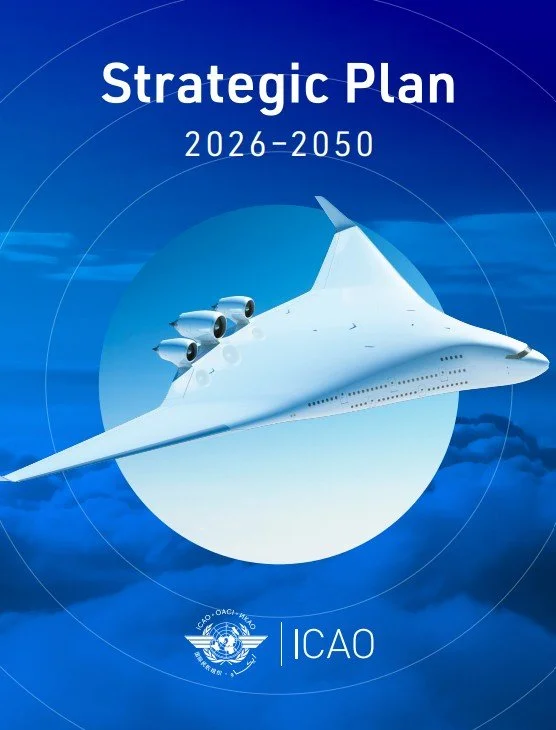
Strategic Plan: As international civil aviation enters a new era marked by unprecedented challenges and opportunities, ICAO presents its comprehensive Strategic Plan for 2026-2050. With air traffic projected to reach 12.4 billion passengers by 2050, this plan guides our sector toward a more safe, secure, economically viable, efficient, and environmentally sustainable future.A safe, secure and sustainable international civil aviation system that connects the world for the benefit of all nations and people.
The 3 Essential Aspirations are:
Net-Zero Carbon Emissions: Achieve net-zero carbon emissions by 2050 for international civil aviation operations.
Connected Transport System: Serve as an integral part of a thriving, connected, accessible, inclusive, and affordable transport system for people and goods, contributing to socio-economic development, while ensuring no country is left behind.
Zero Fatalities: Achieve zero fatalities in international aviation from accidents and acts of unlawful interference.
The Goals and Objectives: To lead international civil aviation as a key driver of social and economic development while enhancing aviation safety, security, economic development and environmental sustainability for a growing aviation system by advancing air law, developing policies, plans and standards, monitoring and auditing, and supporting States’ capabilities for the benefit of all nations and people.
Strategic Goals:
Every Flight Is Safe and Secure: Achieve zero fatalities and ensure continuous protection for air passengers, cargo, and staff.
Aviation Is Environmentally Sustainable: Achieve net-zero carbon emissions by 2050 and mitigate aircraft noise and emissions.
Aviation Delivers Seamless, Accessible, and Reliable Mobility for All: Facilitate seamless air navigation and travel through well-coordinated and affordable services. No Country Left Behind: Enable achievement of safety, security, efficiency, and sustainability goals through collaboration and support.
The International Civil Aviation Convention and Other Treaties, Laws and Regulations Address All Challenges: Maintain responsive international air law addressing current and emerging challenges.
The Economic Development of Air Transport Assures the Delivery of Economic Prosperity and Societal Well-Being for All: Foster development of an economically viable aviation system delivering prosperity for all.
High Priority Enablers: Organizational Improvement - Innovation - Gender Equality and Attracting New Talent to Aviation - Partnerships, Resource Mobilization -Financial Sustainability.
Download Full Strategic Plan (PDF) in EN or in EN.
STATEMENTS: “The lessons learned 84 years ago on that fateful day endure: America must remain vigilant, ready to defeat any threat to its liberty. Today, we honor the heroes who laid down their lives to defend our homeland on the island of Oahu & in the battles of World War II.” Statement by the White House on the National Pearl Harbor Remebrance Day 2025.
Read the Statement of the United Nations Secretary-General on International Civil Aviation Day 2025; The Statement of the ICAO Secretary-General on International Civil Aviation Day 2025; December 7th.


PODCASTS: The ICAO Assembly, composed of representatives from all Member States, meets every three years, reviewing in detail the complete work of the Organization and setting policy for the coming years. It also decides on a triennial budget. The Council, composed of representatives from 36 States, is elected by the Assembly for a three-year term and provides continuing direction to the work of ICAO. A forum for stakeholders to exchange ambitious plans for decarbonizing international aviation, including discussions on policies and concrete roadmaps to zero emissions. A framework to separate hype from real Innovation in aviation. This podcast episode is an AI-generated conversation using NotebookLM and based on our full analysis Listen to the audio-podcasts!
CAMPAIGN MATERIALS: Advertising in ICAO Publications offers you a unique opportunity to promote products and services by reaching targeted decision makers. The 2025 Campaign is organized in collaboration with the Asia and Pacific (APAC) Office in Bangkok, the Middle East (MID) Office in Cairo, the Western and Central African (WACAF) Office in Dakar, the South American (SAM) Office in Lima, the North American, Central American and Caribbean (NACC) Office in Mexico, the Eastern and Southern African (ESAF) Office in Nairobi and the European and North Atlantic (EUR/NAT) Office in Paris. Explore the Banner, poster and postcard; Get the communication materials!
WHY WE CELEBRATE THE DAY?
HOW TO GET INVOLVED!
PARTNERSHIPS
The International Civil Aviation Day was established in 1994 as part of it’s 50th anniversary activities. In 1996, pursuant to an ICAO initiative and with the assistance of the Canadian Government, the United Nations General Assembly officially recognized December 7th as International Civil Aviation Day in the UN system. One of the major duties of the ICAO Council is to adopt International Standards and Recommended Practices (SARPs) and to incorporate these into the Annexes to the Convention on International Civil Aviation. The ICAO Council is assisted by its subsidiary bodies (the Air Transport Committee, the Committee on Joint Support of Air Navigation Services, the Finance Committee, the Committee on Unlawful Interference, the Human Resources Committee and the Technical Cooperation Committee) and by the Air Navigation Commission. Every five years, coinciding with ICAO anniversaries, the ICAO Council establishes a special anniversary theme for the Day. Between these anniversary years, Council representatives select a single theme for the full four-year intervening period. we celebrate the day to highlight the unique role of ICAO in helping States. It is vital that ICAO and its Member States take timely action to monitor and evaluate innovations in order for them to deliver on their potential benefits, in a way that no country is left behind, while supporting the Sustainable Development Goals (SDGs).
You can participate to events held for this occasion by the Civil Aviation Industry sectors, Stakeholders, Researchers, Engineers & Technicians in the Aerospace industry; Traffic Air controlers; Pilots and Aviation schools.
Speak about the importance of aviation as an engine of global connectivity around you. Help generate and reinforce worldwide awareness of the importance of international civil aviation to the social and economic development of States.
Cooperate and realize a truly global rapid transit network at the service of all mankind.
Assess the need, as well as the resources required, to evolve the processes of the Organization, including its working methods with the industry in order to keep pace with innovations that affect the sustainable development of civil aviation.
Establish an inclusive dialogue at strategic level that will encourage further collaboration and sharing of experience in relation to innovation
Develop, high-level policies to address the findings of the aforementioned assessment and subsequently provide a framework that will help ensure the timely development of global policies and standards that support the continuing improvement of safety, efficiency, security, facilitation, economic and environmental performance.
The Secretariat, headed by the Secretary General, has five main divisions: the Air Navigation Bureau, the Air Transport Bureau, the Technical Cooperation Bureau, the Legal Affairs and External Relations Bureau, and the Bureau of Administration and Services. The ICAO works in close collaboration with other specialized agencies of the United Nations such as the International Maritime Organization (IMO), the International Telecommunication Union (ITU), and the World Meteorological Organization (WMO). The International Air Transport Association, the Airports Council International (ACI), the International Federation of Air Line Pilots’ Associations, and other international organizations.
The International Civil Aviation Day is hosted by the United Nations General Assembly, United Nations Framework Convention on Climate Change (UNFCCC), the Airports Council International (ACI), the International Air Transport Association (IATA), the International Federation of Air Traffic Controllers' Associations (IFATCA) the Civil Air Navigation Services Organisation (CANSO), the Civil Aviation Safety Authority(CASA), the Australian Transport Safety Bureau (ATSB), the Federal Agency of AIr Transport and the International Civil Aviation Organization (ICAO). The ICAO maintains the following Regional Offices to provide closer support and coordination for Member States.