PURPOSES: The United Nations General Assembly declared January 26th as the International Day of Clean Energy in order to raise awareness and mobilize action for a just and inclusive transition to clean energy for the benefit of people and the planet. The resolution emphasises the need to increase the share of renewables and clean energy by 2030. The Draft resolution focus on the contribution to the ongoing efforts in the context of SDG7 and further recognize the role clean energy can play in achieving the sustainable development goals. It reiterates the commitment to close the gap that still exists globally in terms of universal access to electricity, while recognizing the common but differentiated responsibilities and respective capabilities in light of different national circumstances, especially in the developing countries. It is also an acknowledgement of the actions that have been implemented and milestones achieved towards an energy transition. Developing countries are committed to improving access to energy while contributing to the global fight against climate change. Energy Transition and Investment Plans detail the actions and investments needed to reach their goals, helping countries attract support.
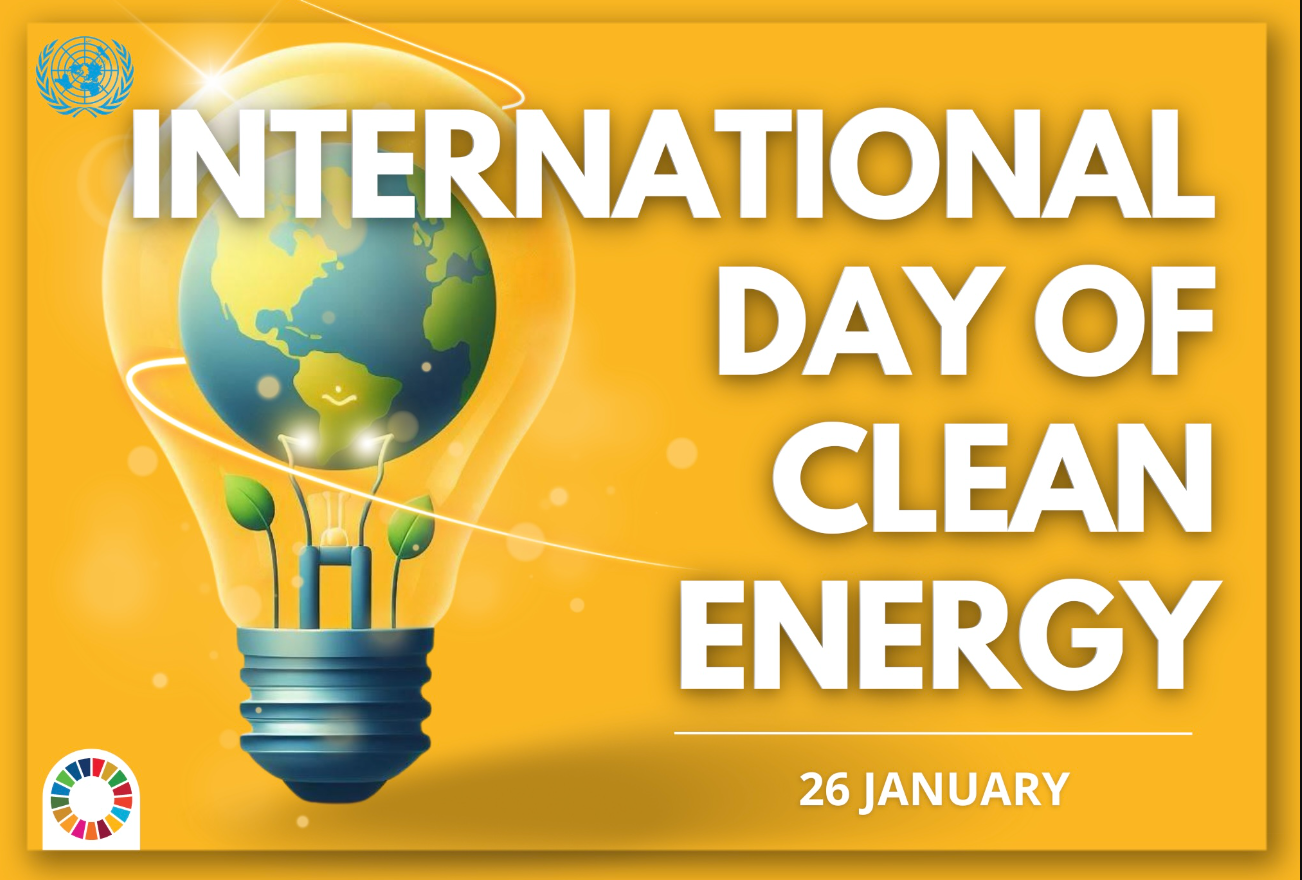
FORUM: “Clean Energy Is the World’s Most Secure Path Forward.” International Day of Clean Energy 2026. Clean energy is reshaping countries, economies and lives faster than anyone expected. Bangladesh has set a global record, electrifying millions of homes powered by off-grid solar, bringing electricity to rural families who waited generations for it. Denmark has shown how wind power can move from experiment to energy infrastructure backbone. The massive purchase by Pakistan of solar panels and batteries has helped the country walk away from natural gas as a strategic fuel. And the ban by Ethiopia on fossil-fuel car imports has sparked a rapid shift to electric vehicles. These projects are proof that clean energy works at scale This is because clean energy now makes economic sense. Today, more than 90 per cent of new renewable power is cheaper than building new fossil fuel plants. Investors see it. Governments see it. Communities feel it. Clean energy is faster to deploy, cheaper to run and more resilient in an increasingly volatile world. It is also creating millions of jobs. About 16.6 million people already work in clean energy worldwide, from manufacturing to installation to innovation. In 2025 alone, global investment in renewables, nuclear, grids, storage, low-emissions fuels, efficiency and electrification hit $2.2 trillion, twice the amount that flowed into oil, gas and coal. For developing economies, this shift offers a powerful opportunity to grow without locking into costly fuel imports or outdated systems. Energy is the engine behind nearly every development goal we care about. Without reliable, affordable energy, progress on poverty, health, education, gender equality, clean water, industry and cities stalls. In fact, an analysis across the Sustainable Development Goal (SDG) framework shows that energy underpins roughly two thirds of all SDG targets, with 125 of the 169 SDGs linked to energy, either directly or indirectly. This is why access to clean energy sits at the heart of the 2030 Agenda, and why getting it right accelerates progress across the board. Nowhere is this clearer than with climate change. Energy use produces about three quarters of global greenhouse gas emissions. If we do not transform how we power our homes, factories, transport and cities, there is no credible path to a safe climate. Clean energy is quite simply the solution. Without a rapid and sustained transformation of energy systems, no credible pathway exists to achieve net-zero emissions by mid-century or to meet the temperature goals of the Paris Agreement. There has been real progress. Nearly 92 per cent of people worldwide now have access to electricity. Clean cooking access has also grown, and currently stands at 74 per cent globally, improving health, saving lives and easing the burden on women and girls. These gains show what is possible when ambition meets action. But the gaps remain stark and unacceptable. 666 million people still live without electricity and 2.1 billion rely on dirty fuels to cook, breathing smoke that harms their health every day. At the same time, clean energy investment remains slow and uneven. For example, Africa, which holds some of the world’s best solar resources, receives just 2 per cent of global clean energy finance. Many countries with the greatest need are still left waiting, perpetuating poverty, inequality and health risks while constraining climate action.This carries significant economic risk. To meet global climate goals and deliver energy for all, clean energy investment must more than triple by 2030, and much of it must go to emerging and developing economies. The good news is that momentum is building. Governments are renewing commitments. Global plans are being updated. Clean energy is firmly on the climate agenda. And 2026 will be a defining year, with a major global review of progress on energy access and sustainability. Clean energy is one of the rare solutions that brings people together rather than pulling them apart. It cuts emissions while creating jobs. It strengthens economies while improving health and opportunity. It gives countries more control over their futures, and communities more power over their lives. The International Day of Clean Energy, observed each year on 26 January, is a moment to recognize just how far we have come and how much further we can go. This day is our call to accelerate action, share solutions and build momentum behind a transition that is already underway. The building blocks are in place. The technologies work. The costs are falling. And the evidence, from villages to entire nations, shows that clean energy delivers. What is needed now is the confidence to move faster and the commitment to ensure that no one is left behind. The international community has a decisive role to play in accelerating the build-out of clean energy infrastructure, especially across the developing world, where energy demand is rising fastest and the stakes are highest. By mobilizing concessional finance, de-risking private investment, and transferring technology and technical expertise, developing countries can undertake grid modernization, energy storage and robust renewable projects that will, in turn, expand clean energy access and strengthen economic resilience. If we choose ambition over hesitation, partnership over fragmentation and action over delay, clean energy can become the defining success story of this decade. It can turn global promises into real progress, lighting homes, powering schools, fuelling businesses and protecting the planet we share. A clean energy future is not only possible. It is within reach. The choices we make today, starting now, will determine whether it becomes a reality for everyone. The Sustainable Development Goal 7 (affordable and clean energy) aims to ensure access to affordable, reliable, sustainable, and modern energy for all by 2030. The IRENA’s World Energy Transitions Outlook calls for a tripling of annual renewable power capacity additions from around 300 gigawatts (GW) to 1000 GW on average until 2030 globally. Let us unite in advancing awareness, innovation, and collaborative efforts to address climate change and ensure a cleaner, greener planet for generations to come. Follow the conversations with the hashtags: #SE4LL, #sdg7, #cleanenergyday, #26January, #renewableenergy, #energytransition, #greenenergy, #smartgrids, #CleanEnergy.
EVENTS: On January 26th, the United Nations will mark the second International Day of Clean Energy, representing a significant milestone in our collective commitment to a sustainable future. the UN-energy, the United Nations Development Programme (UNDP), the United Nations Industrial Development Organization (UNIDO), the International Atomic Energy Agency (IAEA), the International Renewable Energy Agency (IRENA) and stakeholders will held a high-level event to mark the International Day of Clean Energy 2026 to showcase the ways to achieve a just and inclusive energy transition. The event will Explore our new Strategic Plan for 2024-2026. This plan will guide our activities over the coming three years and has been designed to address the biggest obstacles to a just and equitable energy transition. Register to participate!
Starting at 15:00 (CET) Global (live-streamed) -The UEF at 5 is a global live-streamed every celebrating 5 years of the Universal Energy Facility (UEF) and announcing the SOGREA initiative and call for applications; watch the event!
Starting at 11:00 in Lagos (in person) ‘‘Empowering Nigeria's Energy transition’’ an in person panel discussion, photo exhibition and reception on clean cooking, finance and carbon markets coupled with clean energy energy cooking experience exhibition.
Starting from 18:00 - 20:30(CET) in Vienna (in person) ‘‘Empowering solutions Together’’; an in-person panel discussion, photo exhibition and reception on clean cooking, finance and carbon markets.
WEBINARS: Co-hosted by Sustainable Energy for All (SEforALL) Get informations on the upcoming webinars!
STATEMENTS: Read the following messages and quotes for this occasion.


PODCASTS: How you can power a brighter, cleaner future? Since the foundation of IRENA on the 26th of January 2009, the energy transition has taken centre-stage to fight climate change, enhance human welfare and drive an urgent and systemic shift for increased energy access, reduced inequalities, improved energy security, and prosperous and resilient economies and societies. Listen the audio-podcasts!
CAMPAIGN: Currently, the world is not on track to achieve SDG 7, with 675 million people still living in the dark and lacking access to reliable power sources. Join the 2025 International Day of Clean Energy Campaign. “Clean Energy for a brighter future.“ Explore the poster and Get the communications materials!
Why we celebrate the Day?
Adopted by the United Nations General Assembly, this day signifies a global celebration of clean energy and its pivotal role in achieving a just and inclusive energy transition. By creating a day focused on clean energy, the UN underscores the importance of inclusivity and offers a dedicated day for both traditional and non-traditional actors to showcase their contributions to more affordable, reliable, and sustainable modern energy systems that ultimately help accelerate progress towards the 2030 agenda for sustainable development. By 2030, Let’s ensure universal access to affordable, reliable and modern energy services.
HOW TO GET INVOLVED!
Promote the use of renewables and Highlight the need for a unified global approach to energy issues.
Engage in proactive, open discussions about clean energy.
Find innovative solutions for achieving carbon neutrality.
Reduce Greenhouses emissions in Agriculture; Buildings; Transportation and Industrial sectors by developing new systems.
Contribute to help increase renewable energy investments and clean energy solutions
.
PARTNERSHIPS
The International Day of Clean Energy is organized by the United Nations General Assembly; the UN-energy, the United Nations Development Programme (UNDP), the International Industrial Development Organization (UNIDO), the International Atomic Agency (IAEA), the International Renewable Enegy Agency (IRENA).
With the participation of Member States; international organizations; development actors; international and regional financial institutions; regional organizations; local authorities; civil society; academics and other experts; the private sector; media; host community members and individuals.