PURPOSE: The States parties of the OPCW decided that the Day of Remembrance for all victims of chemical warfare will be held on 30 November each year; The memorial Day to remember all the Victims of Chemical Warfare. The United Nations Secretary-General have outlined a vision of disarmament actions that help set our world on a path towards sustainable peace and security for all. One of the actions of the Agenda is to build new leadership and unity in restoring respect for the global norm against chemical weapons.
FORUM: “Let’s Keep the memory of the victims alive.” Day of Remembrance for All Victims of Chemical Warfare 2025. The global community must speak with one voice and reaffirm commitment to the Chemical Weapons Convention, end impunity, and live up to the Pact for the Future’s pledge to a world free of these weapons. Last year, we achieved an important milestone: the destruction of the last chemical weapon from the stockpiles declared by countries that are part of the Chemical Weapons Convention. But the last decade has seen the reemergence of these weapons. Combined with rapid developments in science and technology, the threat grows greater still. This commemoration will provide an opportunity to pay tribute to the victims of chemical warfare, as well as to reaffirm the commitment of the Organisation for the Prohibition of Chemical Weapons (OPCW) which consist to eliminate the threat of chemical weapons, thereby promote the goals of peace, security, and multilateralism. Follow the conversation with the hashtags: #VictimsofChemicalwarfare, #30November,#ChemicalWarfareDay, #Chemicalweaponsconvention.
EVENTS: Celebration of the 100th anniversary of the 1925 Geneva Protocol and the 28th anniversary of the entry into force of the Chemical Weapons Convention.
On November 30th, a homage to the memory of the victims and to uphold the dignity of survivors will be held by the United Nations General assembly first committee to commemorate the Day of Remembrance for all Victims of Chemical Warfare 2025. This year; The OPCW member states, on November 29th will marked the 28th anniversary of the entry into force of the Chemical Weapons Convention. With 193 States Parties, the Convention today embodies the international norm against the use of chemical weapons and remains the most successful disarmament treaty in the world. Watch the CWC at 28 livestream!
The Conference of the States Parties convenes in a special session called the Review Conference (RC) every five years to examine the CWC’s operation. The RC evaluates the Convention’s implementation status and sets out priorities for the OPCW for the upcoming years. The Topics focus on the role of the OPCW and the Chemical Weapons Convention (CWC) in strengthening international peace and security, including preventing chemical weapons re-emergence; on how to Maintain readiness to respond to use or threats of use of chemical weapons; the importance of Science and technology developments relevant to the Convention’s implementation; The Promotion of peaceful applications of chemistry, their safe use and production, and the importance of Promoting universality of the CWC. The Review conference provides strategic direction for the Organisation and ensures that it has adequate resources to deliver on all its core objectives. Watch the live webcast of RC-5.
A number of side events focusing on topics related to the CWC are taking place in the margins of the Conference.
PLIGHT: Join the plight ''For a word “free from the threat of chemical weapons”.
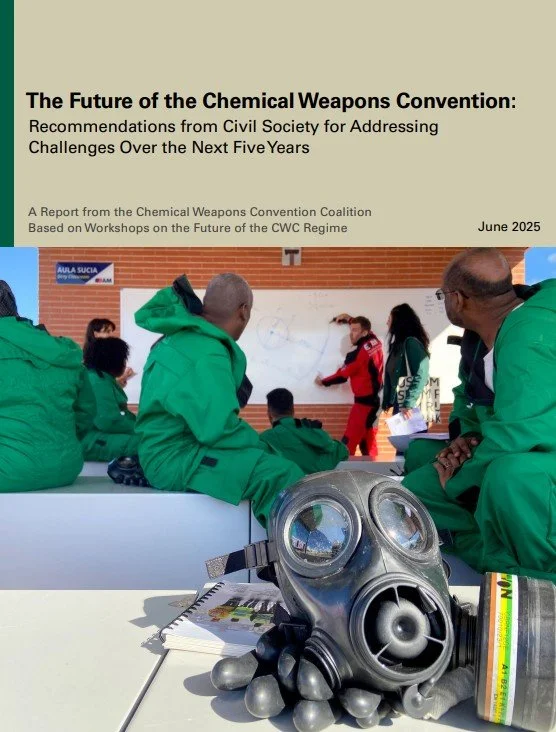
PUBLICATIONS: The Future of the Chemical Weapons Convention. from the ARMS CONTROL ASSOCIATION. In July 2023, the world reached a landmark achievement in the history of weapons of mass destruction (WMDs): the Organisation for the Prohibition of Chemical Weapons (OPCW) confirmed the verified and irreversible destruction of all known chemical weapons stockpiles. 26 years after the Chemical Weapons Convention (CWC) entered into force, it had achieved one of its major goals, becoming the first multilateral disarmament treaty to effectively eliminate an entire class of weapons. This was not the first time that the CWC led the way in disarmament. With 193 member states, the CWC is the most universal of multilateral disarmament treaties. In 2013, the OPCW was awarded the Nobel Peace Prize for its “extensive efforts to eliminate chemical weapons.” The CWC was opened for signature in January 1993 and officially entered into force on 29 April 1997, after the 65th state party adhered to the convention. The treaty is thorough in its attempt to rid the world of chemical weapons: it outlaws the development, production, acquisition, stockpiling, and retention of chemical weapons. The goal of the Organisation for the Prohibition of Chemical Weapons (OPCW) to create a word “free from the threat of chemical weapons” is one step closer now that all declared stockpiles have been destroyed. This latest achievement offered a glimmer of hope in the arms control world amidst rising tensions among nuclear armed powers. Research & Reports
STATEMENTS: “This year marks the 100th anniversary of the 1925 Geneva Protocol. A century ago, after witnessing the terrible impact of chemical weapons during World War I, the international community came together to ban their use in war.The following decades saw remarkable success, including the entry into force of the Chemical Weapons Convention — which now has nearly universal adherence.” Read the full statement of U.N. Secretary-General's on the Day of Remembrance for All victims of Chemical Warfare 2025; November 30th.

PODCASTS: On this Day of Remembrance for All Victims of Chemical Warfare, we pay tribute to those killed or injured, and resolve to end this horror. The Tehran Peace Museum’s Eyewitness Accounts project documents the experiences of survivors of chemical warfare. In these interviews we will talk about how chemical weapons forever changed the lives of victims, war veterans, youth, and professionals told through their powerful stories. Listen to the audio-podcasts!
CAMPAIGN MATERIALS: Participate to the global efforts to achieve a world free of chemical weapons. For this occasion, the OPCW has compiled a Trello board containing key messaging and graphics in multiple languages for use on social media. Get the communications materials!
WHY WE OBSERVE THE DAY?
HOW TO GET INVOLVED!
PARTNERSHIPS
In 2011, the Conference of the States Parties established the International Support Network for Victims of Chemical Weapons and a voluntary trust fund for this purpose. The States Parties asked the OPCW Technical Secretariat to work closely with victims’ associations to bring visibility and awareness to the history of the use of chemical weapons from a victim’s perspective, as well as resources and information for the treatment of victims of chemical weapons.
Support to the victims of chemical warfare and Visit Memorials to honour them.
Disseminate relevant information about national and international laws, regulations, policies and practices on the multiple uses of chemicals.
Promote the peaceful applications of chemicals and work to prevent any misuse of chemicals, scientific knowledge, tools and technologies, and any harmful or unethical developments in research and innovation.
Ensure an Ethos of Science for Peace andSpeak about Chemical disarmament around you
Investigate and analyse samples following the use of toxic agents as weapons.
Achieve a better understanding of the long-term health effects of exposure to chemical weapons
Establishing more effective protocols for the treatment of victims.
The Day of Remembrance of all Victims of Chemical Warfare is hosted by the United Nations General Assembly, the United Nations General Assembly First Committee, the 1540 Committee, the United Nations Security Council, the United Nations Office for Disarmament Affairs (UNODA); the UN Disarmament Commission the Organisation for the Prohibition of Chemical Weapons,the OPCW voluntary trust fund for victims of chemical weapons, the United Nations Institute for Disarmament Research (UNIDIR),
With the participation of Stakeholders, Civil Society organizations, Non-Governmental Organizations, Researchers, Teachers, chemistry practitioners, and policymakers and Academia.