PURPOSE: The Universal Health Coverage Day observed on 12 December is the annual rallying point for advocates to raise the voices and share the stories of the millions of people still waiting for health, call on leaders to make smarter investments in health and remind the world about the imperative of universal health coverage (UHC). UHC means that all individuals and communities receive the health services they need without suffering financial hardship. It includes the full spectrum of essential, quality health services, from health promotion to prevention, treatment, rehabilitation, and palliative care across the life course. The delivery of these services require adequate and competent health and care workers with optimal skills mix at facility, outreach and community level, and who are equitably distributed, adequately supported and enjoy decent work. As demonstrated over the past 75 years, WHO continues to stand with all people, communities, and organizations across the world in taking action towards health for all.
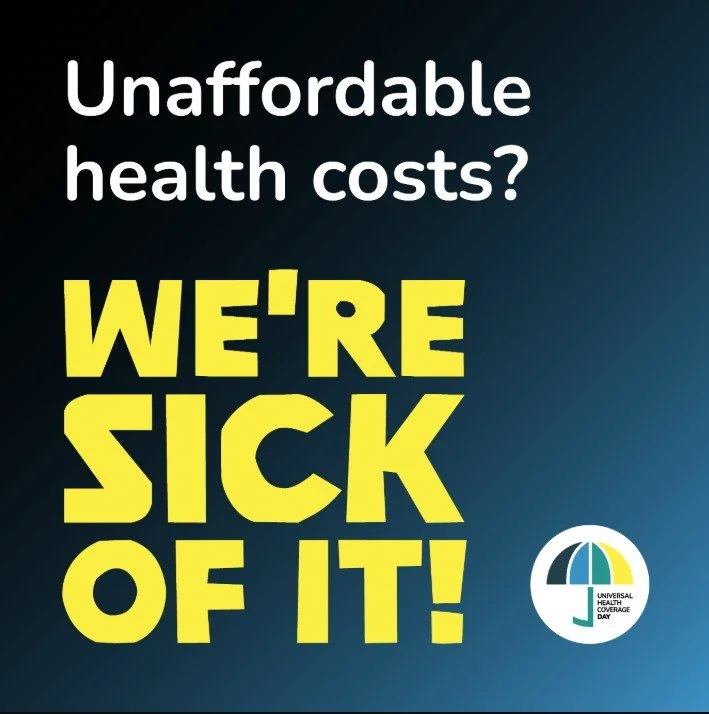
FORUM: “Unaffordable health costs? We’re sick of it!” International Universal Health Coverage Day 2025. The theme focuses on the lived experience behind these statistics, reminding government decision-makers that unaffordable health costs are making our communities poorer and sicker and holding us back on all of the Sustainable Development Goals. On UHC Day, WHO calls for urgent action to implement financial protection measures and eliminate out-of-pocket expenses. Despite numerous high-level political commitments to achieve Universal Health Coverage (UHC) by 2030, more than half of the world’s population still lacks access to essential health services. One in four people face financial hardship when paying for health care out of their own pockets-often at the expense of basic needs such as food, education or housing. Health for all is a prerequisite for achieving the sustainable development goals (SDGs). Healthier populations foster communities that are more resilient, productive, peaceful and prosperous. When people delay or forgo health care due to costs, they risk worsening health outcomes and longer-term health and financial burden. Conversely, when governments prioritize to ensure people have access to affordable health care, they lay the groundwork for sustainable progress across all sectors. This UHC Day, let’s share the stories behind the data to remind leaders that these aren’t just statistics, but human lives we’re talking about, Follow the conversations with the hashtags: #Timeforaction, #Healthexpenditure, #InvestinHealth, #healthForAll, #UHC, #12December, #UHCday, #UniversalHealthCoverage.
EVENTS: On December 12th, the Universal Health Coverage Day 2025 shines a spotlight on the devastating human impact of unaffordable health costs. More than half the world’s population still lacks access to essential health services. And a quarter of them face financial hardship when paying for health care out of their own pockets, often at the expense of food, education or housing. These numbers can be hard to grasp, but we must not forget that there are real people behind them. The high-level event will be hosted by the World Health Assembly (WHA), the Regional offices of the World Health Organization and the Global Health Council visible by the people living in the Latin America region, in the South-East Asia Region, in the European Region, in the African Region and in the Western Pacific Region. See what campaigners are doing around the world and get your event featured on the UHC Day global heatmap by filling this form.
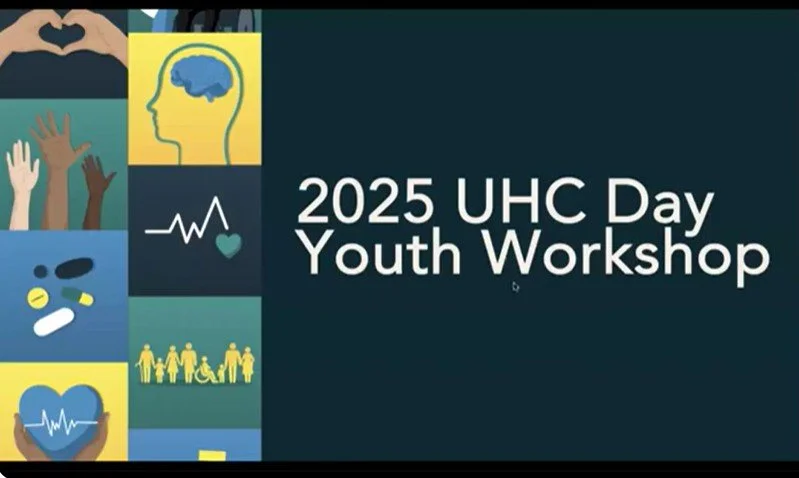
WEBINARS: On November 4th, 2025, more than 380 young people from around the world logged on for the UHC Day Capacity-Building Workshop for Youth – a lively, one-hour virtual event that equipped youth with practical tools and inspiration to drive action for universal health coverage (UHC) ahead of UHC Day on 12 December.
PUBLICATIONS: The world is off track to make significant progress towards universal health coverage (UHC) (SDG target 3.8) by 2030 as improvements to health services coverage have stagnated since 2015, and the proportion of the population that faced catastrophic levels of out-of-pocket (OOP) health spending has increased. UHC 2030 Strategic Framework 2024-2027. Other Suggested reports: Tracking Universal Health Coverage: 2023 Global monitoring report.; The Global Health Expenditure Report 2024; The Operational framework for building climate resilient and low carbon health systems and the UHC2030 Core Team Report.
PODCASTS: PHC entails three inter-related and synergistic components, including: comprehensive integrated health services that embrace primary care as well as public health goods and functions as central pieces; multisectoral policies and actions to address the upstream and wider determinants of health; and engaging and empowering individuals, families, and communities for increased social participation and enhanced self-care and self-reliance in health. Listen to the audio-podcasts!
CAMPAIGN MATERIALS: The campaign toolkit provides a step-by-step guide to help advocates raise their voice and get involved, including messaging and visuals in multiple languages.
Explore the UHC Day communication materials in Arabic, in Chinese, in French in Russian in Spanish languages. Get the communication materials!
WHY WE CELEBRATE THE DAY?
HOW TO GET INVOLVED!
PARTNERSHIPS
The UHC Day is organized by the World Health Organization, the United Nations Children’s Fund (UNICEF), the World Bank Group, the Gavi, the Vaccine Alliance, the International Federation of Red Cross and Red Crescent Societies (IFRC), the UHC2030 alliance.
With the participation o Health experts, Private and Public Health Sectors, Civil society Organizations, Non-Governental Organization, Community health service organization, Healrg researchers and academics.
Take stock of the implementation of the 2019 Political Declaration on UHC, evaluate gaps, challenges, and share best practices and lessons learned to advance progress on UHC.
Identify the effects of COVID-19 on UHC and share efforts to build back better and accelerate progress towards UHC.
Kickstart thematic discussions leading up to 2023 High Level Meeting on UHC, including identifying a shared vision of Health for All and clear objectives for UHC and global health security, around: 1) financing, 2) PHC, and 3) coordination and governance.
Promote political action and leadership for sustainable domestic and global health financing, particularly in the contracted fiscal space for social spending resulting from COVID-19, including through debt suspension and relief for low and middle-income countries (LMICs);
Encourage commitments for strengthening national health systems using a PHC approach to deliver integrated quality services with financial protection and equity, including through increased budgetary allocations for PHC.
The International Universal Health Coverage Day is observed on December 12th to accelerate progress toward universal health coverage (UHC); Primary Health Coverage (PHC) is critical to make health systems more resilient to situations of crisis, more proactive in detecting early signs of epidemics, and more prepared to act early in response to surges in demand for services. Investing in PHC has enormous benefits for promoting health, preventing diseases, advancing equity, and for health security. Estimates show that investing in PHC could increase global life expectancy by as much as 6.7 years by 2030. WHO, therefore, recommends that every country allocate or reallocate an additional 1% of GDP to PHC from government and external funding sources in order to close coverage gaps. A PHC approach, in tandem with strengthening essential public health functions, is effective, efficient and equitable. In recent years, there has been important progress at the political level, with the Declaration of Astana on Primary Health Care in 2018, and the Political Declaration on Universal Health Coverage at the UN General Assembly in 2019. As we look to strengthen health systems in the wake of COVID-19, re-orientation of resources toward primary health care and essential public health functions will be critical for the achievement of UHC and the health-related SDGs.



Make a donation.
People and organizations who want to help fight the pandemic and support WHO and partners can donate. Achieving UHC means everyone will have access to essential health services – including safe, effective and affordable medicines and vaccines – without financial hardship. You can participate through numerous partnerships and health care product donations to non-governmental organizations, health care professional associations to enhance health for all.