
PURPOSE: The United Nations General Assembly has designated 10 February as World Pulses Day to recognize the importance of pulse crops like chickpeas, dry beans and lentils as a global food. Pulses are the edible seeds of leguminous plants cultivated for both food and feed. Beans, chickpeas and peas are the most well known and commonly consumed types of pulses, but there are several more types of pulses from around the world, all with great benefits for food security, nutrition, health, climate change and biodiversity. Pulses, and legumes in general, offer a sustainable option for diversifying agricultural production systems, contributing to healthy soils, promote biodiversity, and support climate change adaptation and mitigation efforts. Despite their potential, pulses remain poorly represented in cropping systems. Although hundreds of varieties of pulses exist, only a limited number are cultivated at significant scales. Additionally, their per capita consumption has declined in both developed and developing countries. This decline is largely due to shifts in dietary patterns and consumer preferences, as well as the inability of domestic production to keep pace with demographic growth in many countries. The Day provides an opportunity to raise awareness about the nutritional benefits of pulses as part of sustainable food production with the aim of enhancing food security and nutrition.
FORUM: “Pulses of the World: From Modesty to Excellence.“ World Pulses Day 2026. The theme was selected to highlight the required transformation – from humble origins to global recognition for their flavours, nutritional attributes and culinary diversity. Pulses bring diversity to our agrifood systems in multiple ways: on the farm, in our diets and through value-added products. They boost biodiversity on farms by enriching cropping systems with more species. With more than 100 types of pulses available, farmers have many options for crop rotations and/or intercropping. Consumers can enjoy pulses as part of healthy diets. They are an affordable, protein-rich food source (19–25 percent protein), packed with essential minerals, high in fibre, and low in fat. These edible seeds are highly versatile and can be processed into different products, such as flour for making bread and pasta, or even protein drinks. That means they provide a range of income opportunities. From improving human health to strengthening soil ecosystems, pulses merit a central place in modern, healthy, and sustainable diets. This year’s theme aims to challenge misconceptions that overshadow these crops and celebrate their true excellence. FAO is running a global campaign to raise awareness about the economic, social and environmental benefits of pulses. Whether you are a policymaker, farmer, educator or a pulses enthusiast, there is a role for you. Follow the conversations with the hashtags: #WorldPulsesDay; #LovePulses; #10February.
EVENTS: The global celebration of World Pulses Day 2026.
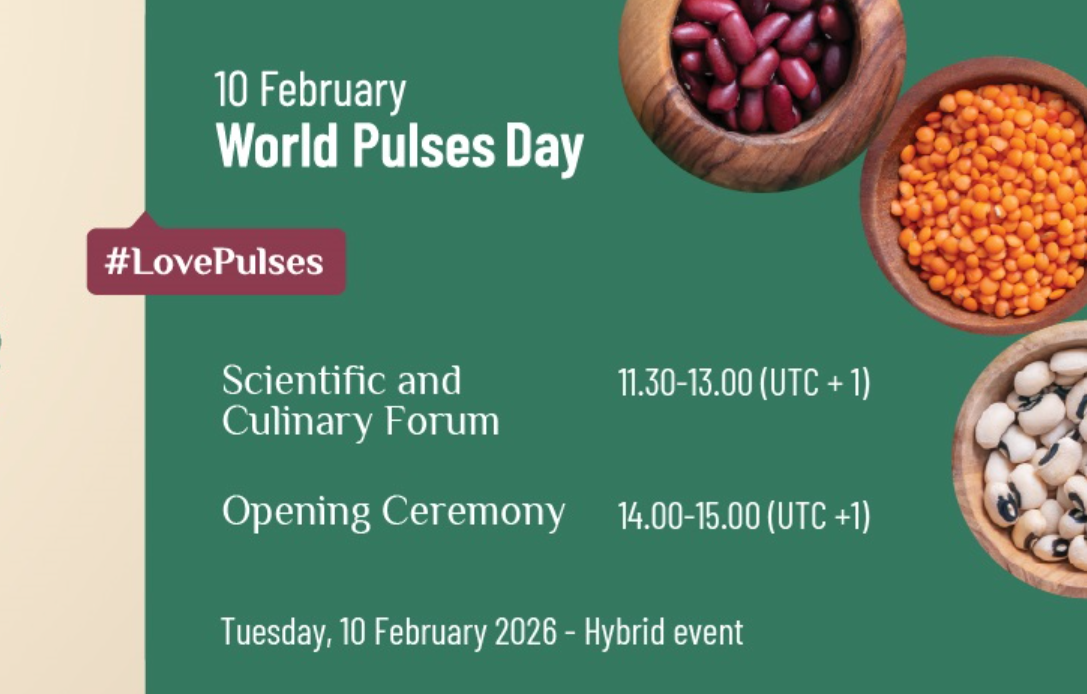
On February 10th, 2026, from 11.30–15.00 (UTC + 1) at the Miguel Delibes Cultural Centre in Valladolid, Spain. The Food and Agriculture Organization of the United Nations (FAO) will held the global observance of the World Pulses Day in collaboration with other relevant partners to underscore the critical importance of these crops in the quest for global food security and nutrition. FAO, the Kingdom of Spain, The Ministry of Agriculture, Livestock and Rural Development of the Regional Government of Castile and León (Castilla y León regional government) are facilitating the event, which will be only the second time that this United Nations-designated observance will be held outside FAO Headquarters – an eloquent testimony to Spain’s strong commitment to sustainable agrifood systems. Register to participate!
Agenda Programme of the hybrid event to mark the World Pulses Day 2026 entitled "Pulses of the world: from modesty to excellence.".
11.30–13.00 (UTC + 1) - Scientific and culinary forum | This forum will explore the role of pulses in advancing sustainable agrifood systems and examine approaches to elevating these crops from their modest origins to the realm of gastronomic excellence. Watch the livestream!
14.00–15.00 (UTC + 1) - Opening Ceremony | High level invitees will participate in the official opening of the World Pulses Day 2026. Watch the ceremony!
EXHIBITS: On the occasion of the World Pulses Day 2026, the FAO Museum and Network opens a new exhibition spotlighting a powerful – yet often marginalized – set of crops for healthy diets and sustainable agrifood systems. The exhibition, titled “Pulses of the World: From Modesty to Excellence” after the 2026 World Pulses Day theme, will be on display from 10 February to 10 March 2026 in a dedicated space within the museum, welcoming both FAO staff and external visitors. Through an engaging display of a vast array of pulses and their end products from around the world, the exhibition invites visitors to rediscover the diversity and nutritional benefits of these crops and, uniquely, how the environment is enriched when they are cultivated. From traditional ingredients to novel food products to be displayed, it will be evident that pulses are key ingredients for healthy, modern and sustainable diets. Multimedia content complements the physical displays, offering insights into agricultural production systems, culinary traditions, innovative uses, and opportunities along the value chains for improved livelihoods, all of which are bringing pulses back to the heart of agrifood systems and the much-needed transformations. Pulses are a subgroup of legumes, packed with nutrients and harvested for their delicious dried seeds. They include familiar favourites like beans, chickpeas and peas, but there’s a whole world of pulse types to explore! All come with great benefits for food security, nutrition and health as well as ecosystem services. Pulses are more than just nutritious seeds, they also contribute to achieving the goals of the 2030 Agenda for Sustainable Development, particularly those pertaining to food security and nutrition, health, sustainable consumption and production and climate change. Building on the success of the International Year of Pulses (IYP) in 2016 implemented by FAO, the United Nations General Assembly (UNGA) designated February 10th as World Pulses Day (WPD). Since 2019, FAO has led the annual observance of this important Day. Despite their exceptional nutritional values and immense environmental benefits, their per capita consumption has declined in many developed and developing countries. In several societies, particularly in urban areas, pulses are still associated with low-cost diets or rural cuisine. In 2026, the theme "Pulses of the World: From Modesty to Excellence" challenges misconceptions that overshadow the benefits of pulses and celebrates their true excellence and role in modern, healthy diets and sustainable agrifood systems. The exhibition is open to the public by reservation via this online FORM.
PUBLICATIONS: Explore the newly published “ A guide to World Pulses Day 2026” for ideas, resources and practical tips tailored for different stakeholders. This comprehensive guide is your go-to resource to learn more about pulses and how you can take part in this global initiative. Get the guide!
Terminology matters: Advancing Science to Define an Optimal Pulse Intake - Confusion around the terms “legumes” and “pulses” has been a long-standing problem among consumers, health professionals, and researchers in the United States. The Food and Agricultural Organization defines pulses as legumes that are harvested solely as dry grain and include beans, peas, chickpeas, and lentils. For the first time ever, the 2020–2025 Dietary Guidelines for Americans recognized and used the terminology “pulses.” Read the full publication!
STATEMENTS: “There is compelling evidence of the contribution of pulses to healthy and sustainable agrifood systems. We invite Member Nations, international and regional organizations, civil society, and all those with an interest in pulses to engage in efforts that support increased production and consumption, so these benefits can be fully realized.” said Yurdi Yasmi, Director of the FAO Plant Production and Protection Division.
“We are trying to reverse these trends and in this year’s celebration, we aim to highlight the true value of these crops,” said Yurdi Yasmi, Director of the FAO Plant Production and Protection Division, noting that the Day is about boosting the sustainable production and consumption of pulses.
“Pulses are a very important food crops and, in the Autonomous Community of Castile and León, we are committed to promoting them,” said María González Corral, Minister of Agriculture, Livestock and Rural Development of the Regional Government of Castile and León.

PODCASTS : Pulses such as lentils, chickpeas and beans are often overlooked on the dinner table. But their true value as a cheap but healthy source of nutrition is now being acknowledged. With the help of nuclear techniques, improved varieties of pulses have been developed, and the role they play in improving soil quality enhanced. Listen to the audio-podcast!
CAMPAIGN MATERIALS: You are invited to join advocacy campaign “Pulses of the World: From Modesty to Excellence.“; The FAO works to facilitate the observance and support the production and consumption of pulses as part of sustainable food systems and healthy diets. Let’s make World Pulses Day 2026 a global celebration that showcases the excellence of pulses!, Explore the action toolkit, the posters and Get the communication materials!
WHY WE CELEBRATE IT?
Building on the success of the International Year of Pulses (IYP) in 2016 implemented by FAO and recognizing the potential of pulses to further achieve the 2030 Agenda for Sustainable Development, the United Nations General Assembly (UNGA) designated February 10th as World Pulses Day (WPD). The objectives of the Day is to raise awareness of the role of pulses in addressing food security challenges, to recognize the contribution of pulses to sustainable food systems and in achieving a healthy and balanced diet.
ACTIONS
Present pulses as an attractive and healthy food option by introducing recipes and teach to audiences how to cook, store, and use them.
Make food choices that improve both our health and that of our agrifood systems
Teach that the benefits of plant protein can help provide more varied menu options and encourage people to eat healthily.
Educate young people on the importance of adding pulses to their diets as means to promote healthy eating habits
Help food businesses, including vendors, restaurants and service companies to promote pulses to the public.
Invest in, develop and adapt processes that can transform agrifood systems to be more sustainable
Implement strategies, including effective trade policies that benefit smallholder farmers who produce pulses
Get involved in activities.
PARTNERS
The World Pulses Day is organized by the Food and Organization (FAO); World Food Programme (WFP), the Global Pulse Confederation the IFAD, CGIAR, USA Pulses; Pulses Australia; Agricultural and Processed food products export development authority of India. With the help of governments, the private sector, Members and partner organizations, the public and youth.

Make a donation.
Conservation agriculture aims to achieve sustainable and profitable agriculture and improved livelihoods of farmers. Let’s contribute in initiating cultivators in planting pulses; Help renovate a facility that will allow researchers and Pulses farmers to grow crops all year round.