PURPOSES:The United Nations General Assembly unanimously adopted on 21 March 2024 as Pursuant to resolution 78/267, the day of November 15th as International Day for the Prevention of and Fight against All Forms of Transnational Organized Crime. The Assembly invites all Member States, the organizations of the United Nations system and other global and regional organizations, within existing resources, as well as other relevant stakeholders, including civil society, the private sector, academia and the media to commemorate the International Day in an appropriate manner, including through educational and public awareness-raising activities, and to share best practices in this regard; besides the Assembly invites the United Nations Office on Drugs and Crime, in collaboration with other relevant entities, to facilitate the observance of the International Day.
FORUM: "Follow the money. Stop organized crime." International Day for the Prevention of andFight Against All Forms of Transnational Organized Crime 2025. This year’s theme, “Follow the money. Stop organized crime.”, highlights how illicit profits drive transnational organized crime. Each year, these crimes generate billions in illicit proceeds, infiltrating economies and supply chains, undermining governance and ultimately causing immense harm to people and planet. With nearly every form of organized crime, whether it’s drug trafficking, firearms trafficking, trafficking in persons, crimes that affect the environment or cyber fraud, there is a money trail. By following the money and exposing this trail, we can cut their lifeline and disrupt organized criminal networks. We call on governments, policymakers, law enforcement, the financial sector, digital platforms, civil society and the public to play their part in stopping organized crime. From strengthening cooperation and financial investigations to safeguarding digital spaces and exposing scams, everyone has a role to Stop Organized Crime. Follow the conversations with the hashtags: #StopOrganizedCrime, #UNTOC_ReviewMechanism, #TOCday, #15november, #OrganizedFraud, #organizedCrime, #UNTOC.
CAMPAIGN STRATEGY: "Follow the money" is a key strategy for combating organized crime by investigating financial transactions to uncover criminal networks and prosecute masterminds. To stop organized crime, law enforcement and international bodies use this method to trace illicit financial flows, while a multi-layered approach also involves strengthening cooperation, enhancing digital safeguards, and preventing crimes through various means.
Key strategies for following the money
Investigate financial transactions: Track money through bank accounts, utility bills, and other financial records to find connections between criminals and their networks.
Prosecute masterminds: By tracing illicit financial flows, investigators can link lower-level criminals to the high-level masterminds and corrupt networks.
Use financial intelligence: Organizations like the Financial Action Task Force (FATF) set international standards for combating money laundering and terrorism financing, providing a framework for investigation.
Gather evidence: Financial transactions can provide crucial evidence for building a case, such as exposing bribery and corruption.
Broader strategies to stop organized crime
Strengthen international cooperation: The United Nations Office on Drugs and Crime (UNODC) and international bodies like the UNTOC work to improve cooperation and intelligence sharing among nations to combat transnational crime.
Implement multi-layered prevention: This includes a "Four P" approach (Prepare, Prevent, Pursue, and Protect) that combines various methods like security systems and surveillance.
Safeguard digital spaces: Acknowledge and address the role of digital platforms and online scams in organized crime.
Build a skilled workforce: Ensure law enforcement agencies have a workforce equipped with the skills for intelligence analysis, surveillance, and inter-agency collaboration to tackle the complexity of organized crime.
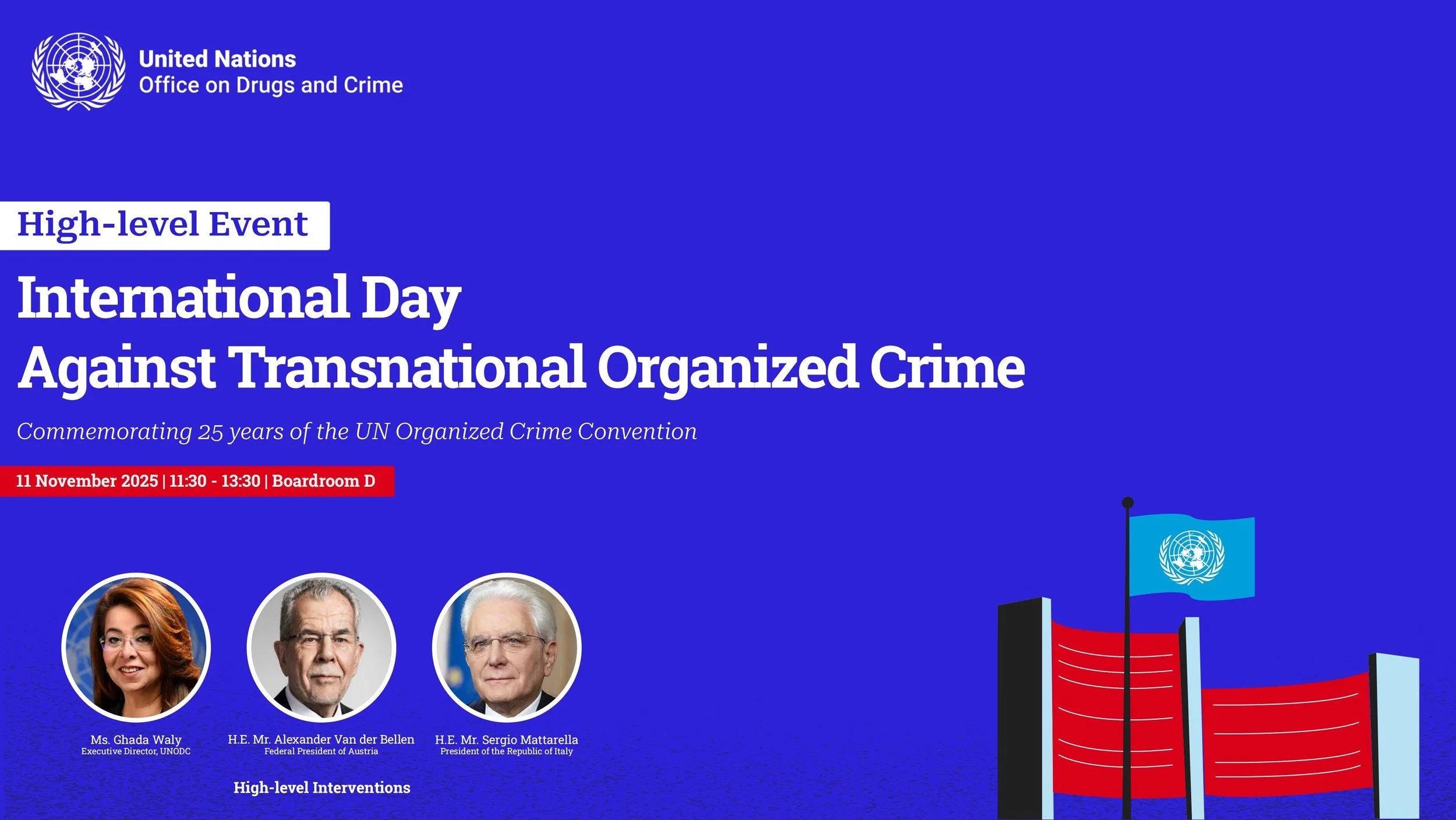
EVENTS: On November 15th, a High-Level Event was held to mark the International Day for the Prevention of and Fight Against All Forms of Transnational Organized Crime 2025 and to Commemorate the 25th Anniversary of the UN Convention AgainstOrganized Crime. The United Nations General Assembly adopted the United Nations Convention againstTransnational Organized Crime (UNTOC), widely known as the Palermo Convention, on 15 November 2000 and its two protocols- Protocol to Prevent, Suppress and Punish Trafficking in persons, Especially Women and Children, and Protocol against the Smuggling of Migrants by Land, Sea and Air. On 31 May 2001, the General Assembly adopted its third protocol- Protocol against the Illicit Manufacturing of and Trafficking in Firearms, Their parts and Components and Ammunition. The Convention established the first globally legally binding and comprehensive framework to strengthen national capacities and promote international cooperation to prevent and combat transnational organized crime, both in its traditional manifestations and its new, evolving and emerging forms. In March 2024, the General Assembly adopted resolution A/RES/78/267, proclaiming November 15th as International Day for the Prevention of and Fight against All Forms ofTransnational Organized Crime. The observance is intended to raise global awareness of the grave threat posed by organized crime, foster stronger cooperation among States, and reinforce collective commitment to the full and effective implementation of UNTOC and its Protocols. The 2025 International Day commemoration, the second of its kind, carries special significance. It marks the 25th anniversary of the adoption of the UNTOC and its Protocols against Trafficking in Persons and the Smuggling of Migrants, as well as the 20th anniversary of the entry into force of its third Protocol on Firearms. This milestone commemoration offers a unique opportunity to take stock of progress achieved, honour those who have dedicated their lives to advancing the anti-crime agenda, and renew efforts to ensure that the Convention is fully and effectively implemented to uphold the vision of global justice, cooperation and security enshrined in it. The commemoration will convene high-level representatives, diplomats, youth leaders, civil society actors and experts in a ceremony designed to showcase political will, joint commitment and shared vision in the fight against organized crime.
AGENDA PROGRAMME -
13:15 – 13:20 Opening remarks • H.E. Mr. Maurizio Massari, Ambassador and Permanent Representative of Italy to the UN
13:20 – 13:32 Key Interventions (6 min each) • H.E. Ms. Chiara Colosimo, President of the Italian Parliament's Antimafia Commission (Video statement) • Ms. Xiaohong Li, Representative of the UNODC New York Liaison Office
13:32 – 14:10 Interventions by co-organizers (3-4 min each) • H.E. Mr. Luis Felipe Ugarelli, Director General of the Ministry of Foreign Affairs of Peru • H.E. Mr. Bart De Wolf, Ambassador and Deputy Permanent Representative of Belgium to the UN • H.E. Mrs. Alejandra Hernandez Gonzalez, Ambassador and Deputy Permanent Representative of the Dominican Republic to the UN • H.E. Mr. Umetsu Shigeru, Ambassador and Deputy Permanent Representative of Japan to the UN • Mr. Stefan Pretterhofer, Deputy Permanent Representative of Austria to the UN • Ms. Majda Moutchou, Deputy Permanent Representative of Morocco to the UN • Mr. Robert Pulver, Chief of the DPO/OROLSI Justice and Corrections Service
14:10 – 14:25 Interventions from the floor
14:25 – 14:30 Closing remarks • H.E. Ambassador Mr. Maurizio Massari, Permanent Representative of Italy to the UN • Ms. Xiaohong Li, Representative of the UNODC New York Liaison Office
LIVESTREAM: UNTOC at 25
From 25 to 30 April 2026 in Abu Dhabi, United Arab Emirates, will be held The Fifteenth Crime Congress under the overall theme “Accelerating crime prevention, criminal justice and the rule of law: protecting people and planet and achieving the 2030 Agenda for Sustainable Development in the digital age”, in line with the General Assembly Resolution 78/223. The Congresses provide a forum for (a) the exchange of views between States, intergovernmental and non-governmental organizations and individual experts representing various professions and disciplines; (b) the exchange of experiences in research, law and policy development; and (c) the identification of emerging trends and issues in crime prevention and criminal justice. Get the Useful Resources on the Overall theme, agenda items and workshop topics, the Discussion guide and learn more about the Generation Justice Initiative. The congress will be organized by the CCPCJ.
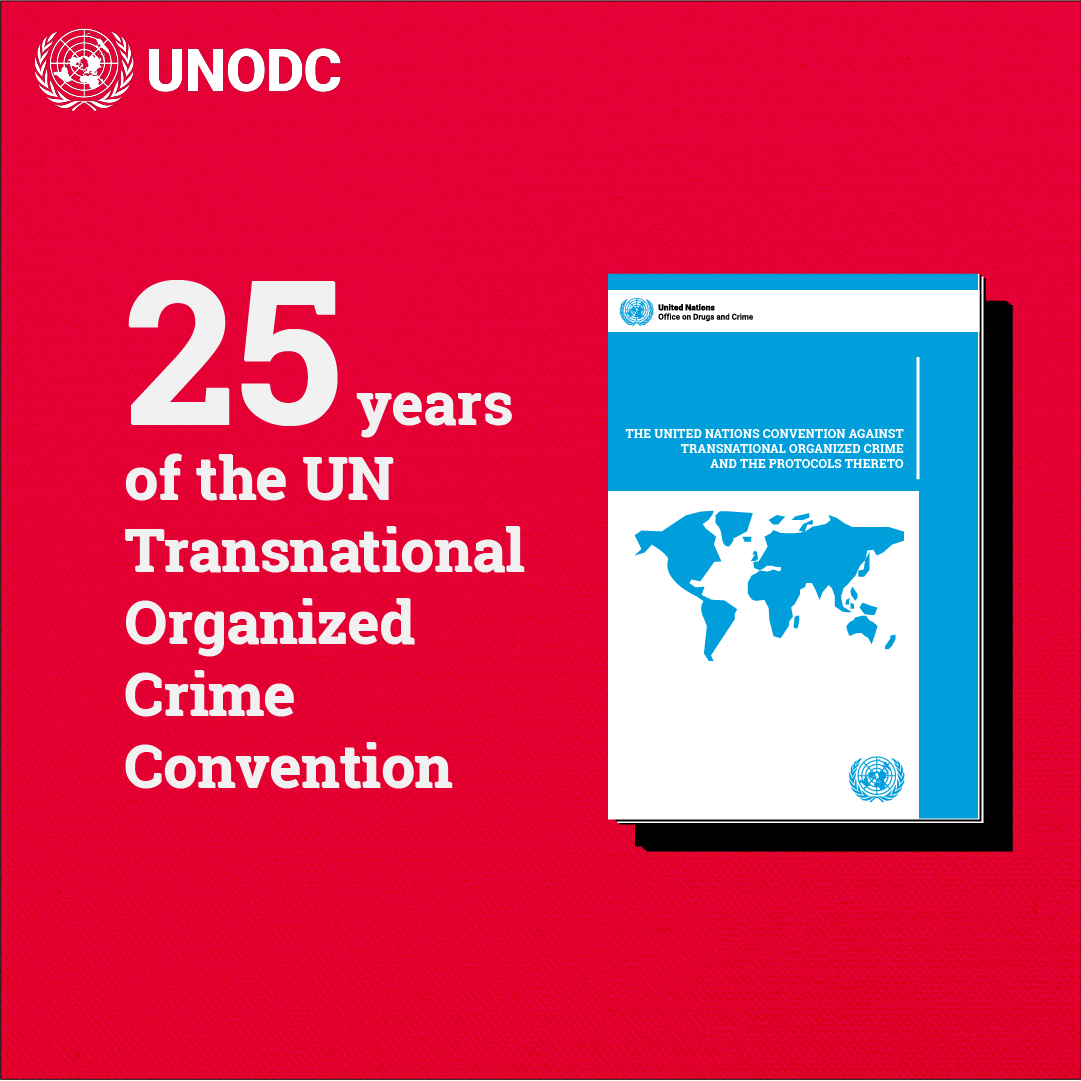
PUBLICATIONS: 25 years ago today, countries united under one commitment: to work together to Stop Organized Crime. Today, we celebrate 25 years of the UN Convention against Transnational Organized Crime. 25 years of partnerships, progress and protection for people and communities worldwide. Explainer: What is the Organized Crime Convention?, Why does this global commitment still matter today?, What is the Convention and why does it matter?
The release of the new Issue Paper on organized fraud is right on time; The focus of the issue paper is organized fraud that targets individual members of the public or private institutions for the purposes of obtaining a financial or other material benefit. Fraud is an expansive category of crime. One of the greatest challenges to understanding it is its scope. It encompasses a range of criminal behaviours that are bound together by the common principle of dishonesty. The opportunities to employ dishonesty for the purposes of fraud span the full range of social, commercial, financial and technological settings, which can vary in different regions of the world. These opportunities are exploited by criminals from highly diverse backgrounds, ranging from professionals exploiting a legitimate corporate position to cybercriminals from within deprived communities. In this way, fraud is distinct from many other criminal categories that cover more discrete criminal behaviours occurring in specific settings (e.g. burglary). This diversity creates challenges in terms of developing a single, cohesive and comprehensive picture of fraud. The newly adopted resolution on technical assistance recommends enhanced protections for witnesses and victims, along with access to compensation and restitution. Read the full report!
STATEMENTS: Read the statement of the United Nations Secretary-General on the International Day for the Prevention of and Fight against All Forms of Transnational Organized Crime 2025; November 15th, the Statement of the UNOD Executive director during the high-level event commemorating the 25th Anniversary of the UN Convention against Transnational Organized Crime and the Statement of the President of the United Nations General Assembly on behalf the International Day for the Prevention of and Fight against All Forms of Transnational Organized Crime 2025; November 15th.
PODCASTS: United against Organized Crime. Listen to the audio-podcasts!
CAMPAIGN MATERIALS: Every year, countless lives are lost to organized crime. From human trafficking to illicit drugs and firearms, its impact is far-reaching. It’s time we pull together to push back and #StopOrganizedCrime. Get the communication materials!
WHY WE CELEBRATE THE DAY?
HOW TO GET INVOLVED!
PARTNERSHIPS
Through Resolution 78/267 of 21 March 2024, the United Nations General Assembly decided to observe on November 15th as the International Day for the Prevention of and Fight against All Forms of Transnational Organized Crime. This day aims to raise awareness of the threats posed by transnational organized crime and to enhance international cooperation in addressing these challenges.
The day also aims to commemorate the victims of organized crime, including those who have lost their lives fighting against it—especially law enforcement and judicial personnel. A special tribute is paid to individuals like Judge Giovanni Falcone, whose sacrifice paved the way for the adoption of the United Nations Convention against Transnational Organized Crime, and whose legacy continues through our global commitment to this cause.
This year’s TOC Day is a call to:
Raise Awareness: Shine a light on the far-reaching impacts of organized crime on communities, economies and governance systems across the globe.
Foster Global Collaboration: Encourage stronger partnerships between governments, civil society and the private sector to address the cross-border nature of organized crime and develop joint solutions.
Empower Communities: Highlight grassroots efforts and community-led initiatives that build resilience against organized crime. Focus on prevention strategies to tackle the root causes of organized crime and empower local responses.
Promote Knowledge Sharing and Capacity Building: Share innovative tools, strategies and best practices to combat organized crime while strengthening the capacity of law enforcement, the justice sector and communities.
Support Policy Development: Advocate for policies that address the root causes and consequences of organized crime, reinforcing governance, the rule of law and human rights.
Leverage Technology for Change: Acknowledge both the threats and opportunities posed by technology in the fight against organized crime, from the rise of cybercrime to the use of tech in more effective detection, prevention and responses.
Led by the United Nations Office on Drugs and Crime (UNODC), this campaign showcases success stories where cooperation has led to meaningful progress, from dismantling trafficking networks to promoting sustainable alternatives to illicit economies. Together, we can push back against organized crime and build safer, more resilient communities worldwide.