PURPOSE: The Universal Children’s Day is celebrated annually on November 20th. Its goal is to improve child welfare worldwide, promote and celebrate children’s rights and promote togetherness and awareness amongst all children. Initially launched in 1954, Universal Children’s day has seen some milestone events in the field of child welfare. The day is an occasion to mark the anniversary of the dates when the United Nations General assembly adopted both the Declaration of the rights of the child and the convention of children’s rights. The OHCHR through the convention sets out a number of children’s rights such as the rights to be protected from violence and discrimination and the rights to life, health and education. UNICEF has helped save and meaningfully improve more children’s lives than any other humanitarian organization. Other organizations help children, but UNICEF does more by fighting for children’s rights and delivering the essentials every child needs for an equitable chance in life. UNICEF won’t stop until every child is healthy, educated, protected and respected. That is why the General assembly charged the UNICEF to supervize the global celebration worldwide.
FORUM: "My day; My rights." World Children's Day 2025. From the moment the sun rises, children wake up to a world shaped by choices they didn't make. But every child, everywhere, also wakes with rights. Including the right to be protected, to learn, and to have their voice heard. It’s time to listen to children. To understand what their lives are like and how their rights are present, missing, or pursued every day. Children’s rights are non-negotiable and universal. But in too many places today children’s rights are being misunderstood, disregarded or even denied and attacked. A better future For Every Child is possible, and children are leading the way. By championing their right to be heard, we can better fulfill the rights of every child, everywhere. Children’s rights are human rights and today, children’s rights are under attack. On this Day we will making space for children and young people to raise their voices on the issues that matter to them and will thanking every person doing everything in their power to protect children and their rights, even in the most impossible situations. By prioritizing children's rights and participation, we can help to build a better future for all. For Every Child, we wish hope. Let’s amplify children’s voices and stand up for the rights of every child. How are you living child rights every day? If you had the whole world's attention, what would you tell them about your days and rights?; Follow the conversations with the hashtags: #WorldChildrensday, #20November; #ForEveryChild, #EveryRight.
EVENTS: 36th anniversary of the entry in force of the Convention on the rights of the child.
On November 20th; The United Nations General Assembly, The UNICEF, the OHCHR and several specialized agencies will host several events to mark The World Children’s Day 2025 to promote action for children with several activities held by children. This year mark 36 Years since the adoption of the CRC (Convention on the Rights of the Child). Around the world, children are standing up and talking about their lives, their hopes, and their rights. Register to participate!
On November 20th, an event entitled ''Kids take over.'' will be held; Children will ‘take over’ high-visibility roles in media, politics, business, sport and entertainment normally held by adults to shine a spotlight on issues that matter to them.
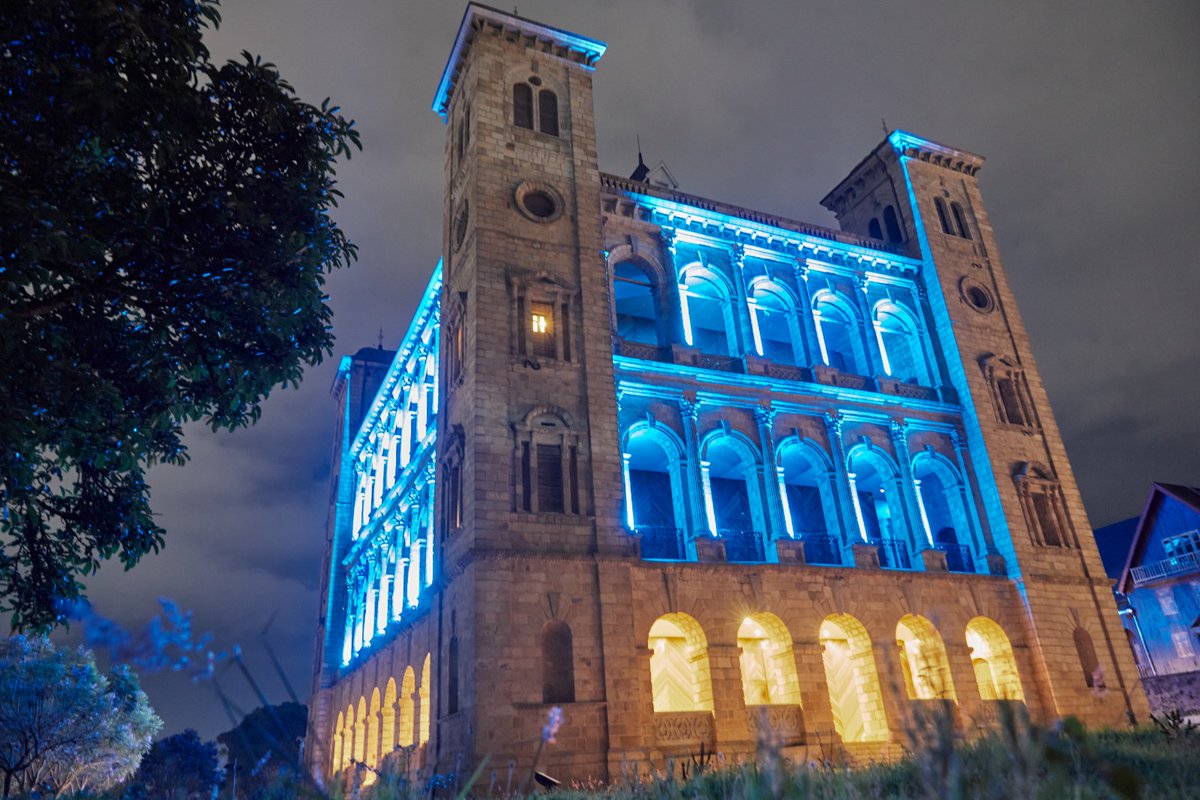
On November 20th, an Illumination ''Turn the world blue.'' will be held. From children and young people taking over to famous landmarks turning blue, here’s a taste of what to expect on the day. Landmark buildings around the world will light up blue on the day to show support for child rights. Wear something blue, change your profile picture online and help raise awareness.
With World Children’s Day approaching, actors from the private sector are encouraged to share activities they can implement. Explore what’s happening around the world!
PUBLICATIONS: Explore resources for parents and teachers on child rights.
The State of the World’s Children 2025 - Ending child poverty: Our shared imperative. Far too many children live in poverty, deprived of financial resources and essentials like schooling and sanitation. But child poverty is not inevitable. Countries have shown what is possible when they prioritize children. What we need now is commitment to implement proven strategies, to innovate as crises converge, and to keep an unwavering focus on the rights of every child. Read the full report
Progress on Children’s Well-being: Centring child rights in the 2030 Agenda - The UNICEF examined available data on the 48 child-related Sustainable Development Goal (SDG) indicators which the agency regularly monitors. Organized around five domains of child well-being. These indicators capture the breadth of children’s lived experiences. When viewed together – rather than as individual sectors – they provide a rich, nuanced picture of children’s lives that tell us which children are thriving and which children are being left behind. Read the report!
Progress on Children’s Well-being: Country Briefs - These country briefs leverage UNICEF’s extensive analysis of 48 child-related Sustainable Development Goal (SDG) indicators. A benchmarking exercise compares countries against global standards, income groupings, and geographical areas, offering a systematic framework to monitor and compare progress across various child-related SDG indicators. Current country performance is assessed and the necessary rate of to achieve 2030 targets is calculated. Read the report!
9 Facts about Children on the Move - How many children are on the move today? What are their countries of origin, countries of destination and their primary migration routes? How many of them have been forcibly displaced? This brochure – a product of the International Data Alliance for Children on the MOVE (IDAC) – answers these questions and more. Using the latest available data, it shares a critical set of data visualizations, succinct analyses and top-line messages about migrant and displaced children today. Read the report!
International Classification of Violence against Children (ICVAC) - ICVAC includes operational definitions of all forms of violence against children and covers interpersonal and collective violence, both in times of peace and during internal or international armed conflict. The classification will provide countries with a tool to capture and categorize incidents of violence and consequently assess the extent to which their national definitions and data collection efforts comply with internationally-agreed standards. Read the report!
STATEMENTS: Read the statement of the United Nations Secretary-General on World Children’s Day 2025; November 20th and the Statement of the UNICEF Executive-Director on World Children’s Day 2025; November 20th.
PODCASTS: Every child, everywhere, has a right to live in a peaceful world. Children have a right to a safe and livable planet and a right be listened to and included in all decisions that affect them. This World Children’s Day, we will explain to our listeners Why every right is essential for every child. Listen to the Audio-Podcast!


CAMPAIGN MATERIALS: Meet UNICEF’s youth advocates. Explore the tools For Youth: Take the U-Report poll on child rights, For Parents: Access the parenting toolkit, For Teachers: Help children learn about their rights. Get the communication materials!
WHY WE CELEBRATE THE DAY?
The World Children’s Day is hosted by the United Nations Children's Fund (UNICEF), the Committee on the Rights on the Child, the United Nations Human Rights Council, the UNESCO, the UN Refugee Agency (UNHCR), the Office of the High Commissioner for Humanitarian Affairs (UNOCHA), the United Nations Office for Children of Conflicts, the UN Special Rapporteur on sale the and sexual exploitation of children, the Special Rapporteur on the Rights of the Child, the UN-Women, the United Nations Population Fund (UNFPA). With the collaboration of Civil Society Organizations, International and Non-Governmental organizations; Schools, Parents, and academia.
HOW TO GET INVOLVED!
PARTNERSHIPS
The Assembly suggested to governments that the Day be observed on the date and in the way that each considers appropriate Buildings and infrastructures will light up in blue to mark World Children's Day. The illuminations entitled “Going Blue” express our fight for children’s rights. A symbol to remind us that children must be listened to, included and taken seriously in every decision that concerns them. On November 20th, kids will stand up for a more equal, inclusive world. Explore ways you can get involved in the celebration
Young people: Join the U-Report community
Parents: Help nurture children’s voices
Teachers: Access resources on child rights
Government: Take action for child rights
What will you do?
By resolution 836(IX) of 14 December 1954, the United Nations General Assembly recommended that all countries institute a Universal Children's Day, to be observed as a day of worldwide fraternity and understanding between children. It recommended that the Day was to be observed also as a day of activity devoted to promoting the ideals and objectives of the UN Charter and the welfare of the children of the world. The date 20 November marks the day on which the Assembly adopted the Declaration of the Rights of the Child, in 1959, and the Convention on the Rights of the Child, in 1989. The World Children’s Day is UNICEF’s annual day of action for children, by children. It’s a day where children and young people raise their voices to call on adults to create a better future For Every Child.
Children and young people are powerful agents of change, bringing new ideas and perspectives that can help shape a better world for all of us. Explore messages and profiles from children and young people speaking out for children's rights, and access resources to hold your own conversations.