PURPOSE: In August 2021, the General Assembly of the United Nations recognized the unique benefits of cotton by proclaiming 7 October of each year as World Cotton Day. The celebration of the day is an opportunity to highlight the role of cotton in creating jobs and maintaining economic stability in cotton-producing countries, particularly in least-developed countries (LDCs). Cotton is the most important natural fibre due to its rapid growth rate and wide range of applications in apparel and home furnishings. Demand for cotton is a derived demand, as it depends on the global demand for textile products. Competition from substitutes, such as polyester and other synthetic fibres, also influences the performance of the sector. Over the last decade, textile utilization rose steadily and is mainly driven by population and income growth in developing countries, particularly in Asia. Moreover, demand for natural fibres has expanded quite markedly in recent years, reflecting a growing trend for sustainability. Cotton is also a culture, a way of life, and a tradition with its roots at the heart of human civilization. The objective of this global celebration is to raise the visibility of the cotton sector and awareness of the critical role that it plays in economic development, international trade and poverty alleviation.
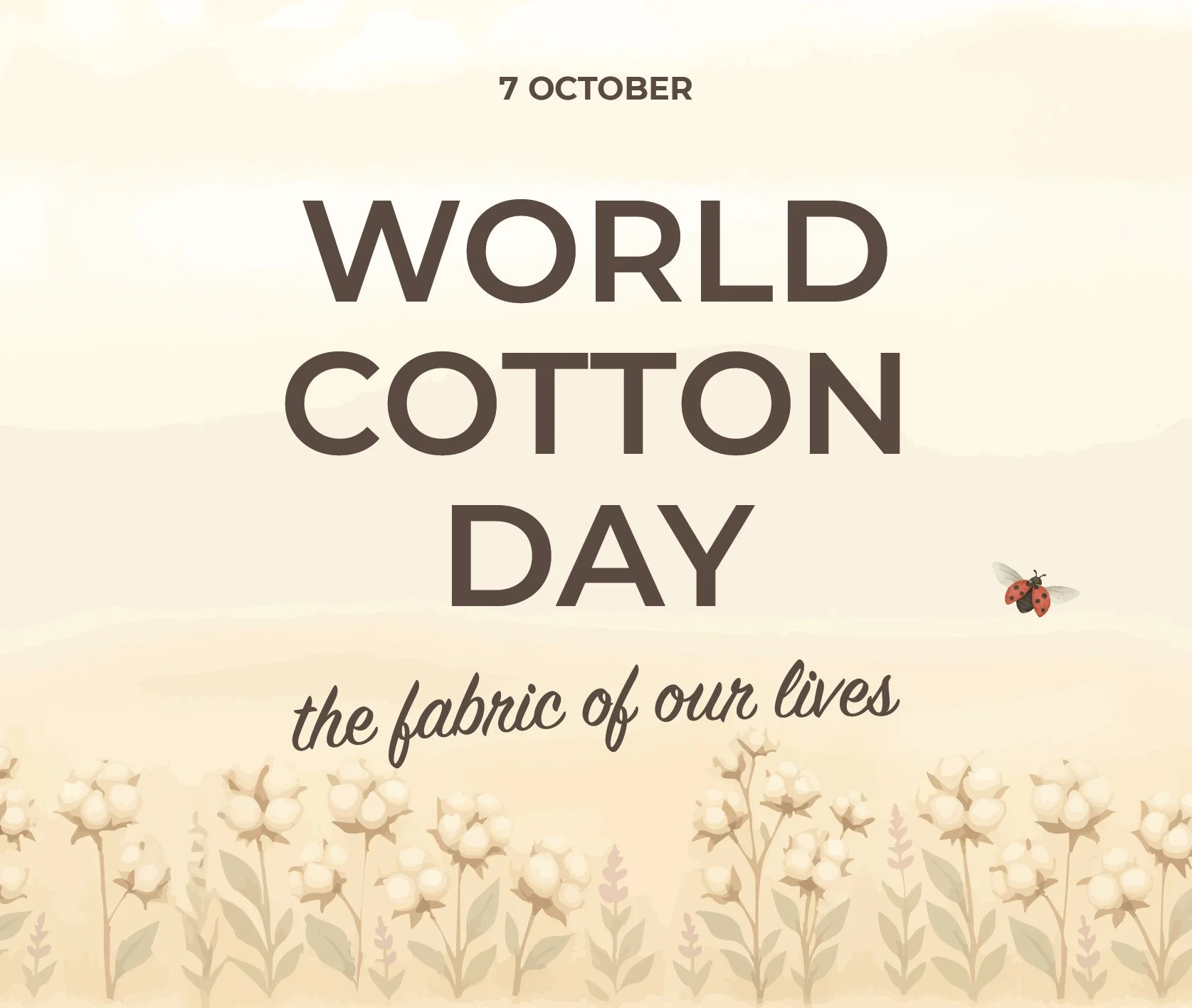
FORUM: ''Cotton, the fabric of our lives.'' World Cotton Day 2025. Cotton touches us every day, it is a source of livelihoods for millions of smallholders and labourers, including women and their families, and contributes significantly to the economies of many developing countries. The World Cotton Day is an excellent opportunity to renew our commitment to enhancing the sustainability of the cotton sector and bring it to the forefront of the global agenda. Join us as we celebrate the many opportunities within the cotton sector, highlighting its vital role in fostering international trade and inclusive economic growth. Discussions will focus on boosting productivity at all levels, advancing innovative strategies for adding value along the value chain, and reinforcing the power of trade to support a better future for all. Follow the Conversation with the hashtags: #7october, #cotton, #WorldCottonDay.
EVENTS: EVENT: On Tuesday, 7 October 2025, starting at 9:00 hours (CEST) from FAO Headquarters, Rome, Italy. The event entitled "The Fabric of our Lives"; Organized jointly by the Republic of Chad, the Food and Agriculture Organization of the United Nations (FAO), and the International Trade Centre (ITC). This year’s celebration will showcase the many opportunities within the cotton sector, highlighting its vital role in fostering international trade and inclusive economic growth. Discussions will focus on boosting productivity at all levels, advancing innovative strategies for adding value along the value chain, and reinforcing the power of trade to support a better future for all. The programme will include two segments designed to inspire action and showcase innovation: Segment (I) Voices of the Next Generation: Transforming Cotton into Design will feature short presentations and live interventions from young designers, students, and entrepreneurs reimagining cotton through creative and innovative applications, from concept to finished product. Segment (II) From Field to Fashion: Local Cotton Transformation in West Africa will highlight the cultural richness and potential of cotton in West African producing countries, while exploring how artisanal processing can drive locally led development of the sector. The FAO Director-General, QU Dongyu will highlight the crucial role the cotton sector plays for Members as well as its broader economic and social relevance around the world. The celebration is jointly hosted by Secretariats of the United Nations Industrial Development Organization (UNIDO) and the Food and Agriculture Organization of the United Nations (FAO) and is organized in cooperation with Secretariats of the World Trade Organization (WTO), the International Trade Center (ITC), the United Nations Conference on Trade and Development (UNCTAD) and the International Cotton Advisory Committee (ICAC). Explore the World Cotton Day 2025 | Provisional Programme. Join Via Zoom; Register to participate and Watch the livestream!
PUBLICATIONS: Cotton: Its Uses, Varieties, Fiber Structure, Cultivation, and Preparation for the Market and as an Article of Commerce, also the Manufacture of Cotton-Seed Oil, Cotton-Seed Meal, and Fertilizers, with Especial Reference to Cotton Growing, Ginning, and Oil Pressing in the United States. C. P. Brooks. The Story of the Cotton Plant. by F. Wilkinson. Read the full publication!
The Cotton Outlook: News. Data. Analysis published by the Cargill, Incorporated. Read the full report!
The OECD-FAO Agricultural Outlook 2025-2034: The report is a collaborative effort of the Organisation for Economic Co-operation and Development (OECD) and the Food and Agriculture Organization (FAO) of the United Nations. It brings together the commodity, policy, and country expertise of both organisations, as well as input from collaborating member countries, to provide an annual assessment of the prospects for the coming decade of national, regional, and global agricultural commodity markets.
The OECD-FAO Agricultural Outlook 2025-2034 - Chapter 9 (Cotton): This chapter describes market developments and medium-term projections for world cotton markets for the period 2025-34. Projections cover consumption, production, trade and prices for cotton.
The OECD-FAO Agricultural Outlook 2024-2033 : This document describes market developments and medium-term projections for world cotton markets for the period 2024-33. Projections cover consumption, production, trade and prices developments for cotton. Read the OECD-FAO Agricultural Outlook 2024-2033 Chapter 10: Cotton.
STATEMENTS: Read the statement of the FAO Director-General on World Cotton Day 2025; and the message of the WTO Director-General; Mrs Ngozi Okonjo-Iweala on World Cotton Day 2025; October 7th.

PODCASTS: The mobilisation of innovative technologies and resources is vital to ensure that the sector remains viable and sustainable. Stakeholders from the global cotton community come together to speak on the many advantages of cotton–from its qualities as a natural fiber, to the many benefits people obtain from its production. Topics this year include sustainability, women in cotton, brand and retailer partnerships, and more. Listen to the audio podcasts!
CAMPAIGN MATERIALS: ''Cotton, the fabric of our lives.' is the slogan of this year’s campaign. To join the movement, explore the FAO Digital Media Library, the digital assets and Get the communication materials!
WHY WE CELEBRATE THE DAY?
HOW TO GET INVOLVED!
PARTNERSHIPS
Cotton is the most important of the natural fibres, used daily in apparel and home furnishings. Cotton is a critical means of livelihood for millions of smallholders and their families by providing employment and income. It represents an important source of export revenues for some of the poorest countries in the world. IT is estimated that about 32 million farmers produce cotton globally and nearly half of them are women. Around 80 % of cotton is used in apparel, 15 % in home furnishings and the remaining 5% mostly accounts for non-woven applications, such as filters and padding. The World Cotton Day offers a unique opportunity to renew the commitment to a sustainable cotton sector for better production, better nutrition, a better environment, and a better life, leaving no one behind.
Enhance Improve Cotton cultivation
Address Properly the production and demand sides
Realize the potential Cotton sector in supporting economic growth and sustainable development.
Empower women and boost youth employment, while ensuring decent work for all.
Mobilize innovative technologies and resources to ensure the viability and the sustainability of the cotton sector.
Increase raw cotton production and create new income opportunities, especially for farmers
Add more value to cotton fibre and develop by-products from other parts of the cotton plant.
Enhance trade liberalization in the cotton sector.
The World Cotton Day is hosted by the United Nations Food and Agricultural organization (FAO), the United Nations Conference on Trade and Development (UNCTAD). The World Trade Organization (WTO), the International Trade Centre (ITC), and the International Cotton Advisory Committee (ICAC).
With the collaboration of the IFPRI, the IFAD, the CIFOR and cotton traders, producers and small scale farmers.