PURPOSE: Arabic Language Day is celebrated every year on 18 December since 2012. The date coincides with the day in 1973 that the United Nations General Assembly adopted Arabic as the sixth official language of the Organization. The objectives of the U.N. Arabic Language Day is to promote equal use of all six official working languages throughout the organization and to celebrate multilingualism, as a core value, and cultural diversity. The celebration of the Arabic Language day aims to acknowledge the contribution of the ‘Arabic language’ in enriching science, philosophy, literature, art and universal culture. The day is also an opportunity to look into the status and the future of one of the most widely spoken languages across the globe.
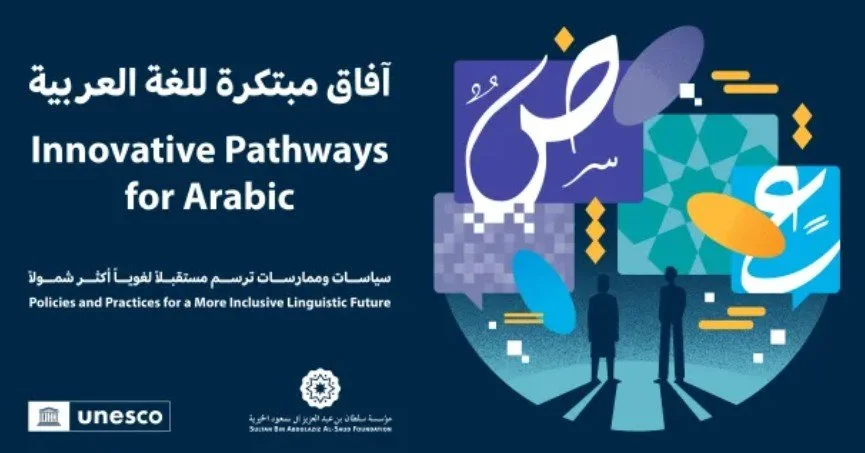
FORUM: “Innovative Pathways for Arabic: Policies and Practices for a More Inclusive Linguistic Future." Arabic Language Day 2025. The 2025 edition of World Arabic Language Day explores how innovation and inclusion can shape the future of the Arabic language. The celebrations will spotlight how education, media, technology, and public policy are driving more accessible, dynamic, and socially responsive uses of Arabic. Closely aligned with UNESCO’s MOST Programme, the theme reflects a commitment to inclusive, evidence-based approaches to social development. In an era of rapid digital transformation, this year’s focus on initiatives that expand Arabic’s presence across education systems, digital platforms, and public discourse, especially in multilingual or under-resourced communities. By showcasing forward-looking and cross-sector practices, the 2025 celebrations aim to promote linguistic equity, empower diverse communities, and ensure Arabic remains a vibrant, adaptable language rooted in its rich cultural heritage. Follow the conversations with the hashtags: #ArabicLanguageDay, #18December, #Arabiclanguage, #Multilingualism.
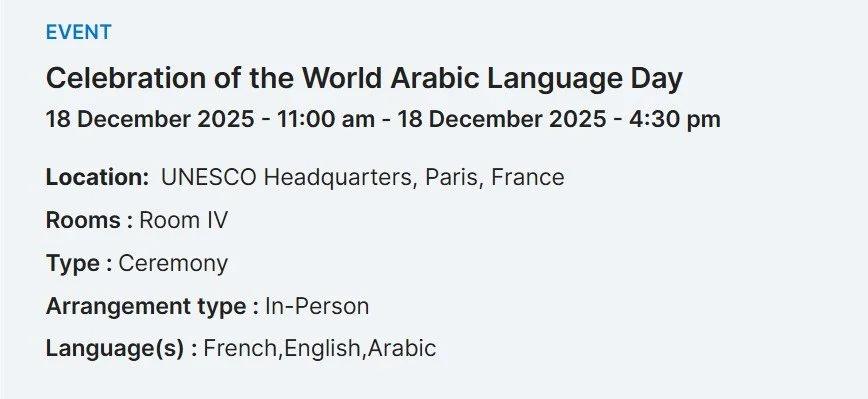
EVENTS: At UNESCO Headquarters in Paris; On December 18th; The celebration of World Arabic Language Day 2025 will be held from 9:30 am to 5:30 pm GMT. The UNESCO organizes round table discussions and cultural performances to explore innovative pathways for the Arabic language. This year’s commemoration also coincides with the 52nd anniversary of the proclamation of Arabic as one of the six UN official languages. To pay tribute to the poetic and artistic brilliance of the Arabic language, UNESCO will bring together researchers, academics, youth, and heads of international institutions. Together, let’s shape inclusive policies and practices for a richer linguistic future. Learn more about the event and Register to participate and Watch the webcast!
PRIZES: Applicants to the Prize for Arab culture must have contributed significantly towards the development, dissemination and the promotion of Arab culture in the world. The prize is awarded annually to two individuals, groups, or institutions who have made an exceptional contribution to the dissemination and promotion of Arab art and culture. The prize highlights efforts to strengthen global awareness of Arab culture while promoting intercultural dialogue and mutual understanding between cultures. It carries a monetary value of 60,000 USD, which is equally divided between the two laureates. The winners of the UNESCO-Sharjah Prize for Arab Culture will be announced. The event will serve as a solid platform to delve into the discussions while fostering cultural diversity and intercultural dialogue. Register to Participate!
AWARD: With the recommendations of His Highness Sheikh Dr. Sultan bin Mohammed Al Qasimi, Member of the Supreme Council and Ruler of Sharjah, and in celebration of Sharjah being chosen as the Cultural Capital of the Arab World for the year 1998, the Emirate of Sharjah proposed the establishment of the Sharjah Award for Arab Culture to UNESCO. The award aims to recognize the efforts of cultural figures, both men and women, as well as institutions or groups that contribute through their intellectual, artistic, or promotional works to the development and dissemination of Arab culture worldwide. Nominations for the award are proposed to the Director-General by the governments of member states of UNESCO and relevant non-governmental organizations that have official relations with UNESCO.
Terms and conditions of participation
The nomination for the award must be accompanied by a written recommendation, including:
Description of the nominee's works.
Summary of the results achieved by their works.
Statement of the nominee's contribution to the development or better dissemination of Arab culture.
Nomination files are submitted to the jury members, who discuss the entire set of nominations. Based on this, two winners are selected and proposed to the Director-General of UNESCO.
Selection Criteria:
Innovation
Contribution to research and promotion of societal values and aspirations, especially in the fields of women and youth.
Contribution to the development of cultural heritage.
Highlighting unity in the creative diversity of humanity.
Contribution to dialogue between cultures and civilizations.
The nominee's place and uniqueness of their vision regarding others.
Respect for others in their differences.
Necessary attachments: Nominees can be individuals, groups, or institutions that have contributed to the development, dissemination, and promotion of Arab culture worldwide, as well as the preservation of intangible Arab cultural heritage.
The award is valued at $60,000 USD and is awarded annually by the Government of Sharjah (United Arab Emirates), with equal distribution between winners from an Arab country and a non-Arab country.
Selection of Winners:The winners are selected by the Director-General of UNESCO based on proposals submitted by the jury committee.
Contact: MS.Shama/ Phone: 00330145685591/0033145684271. Email: s.chokkam-snnderraj@unesco.org
STATEMENTS: Read the Joint Message from Ms. Noha Bawazir, UNESCO Representative in Jordan, & Ms. Souha Bawab, Executive Director of Friends of Jordan Festivals on Arabic Language Day 2024.

PODCASTS: A language of undeniable beauty and power, Arabic is recognised for its contribution to poetry and the arts. Arabic Language gives access to an incredible variety of identities and beliefs and its history reveals the richness of its links with other languages Listen to the audio-podcasts!
CAMPAIGN MATERIALS: Under the slogan ''Innovative Pathways for Arabic: Policies and Practices for a More Inclusive Linguistic Future''; Let’s celebrate the 52nd anniversary of the proclamation of Arabic as one of the 6 United Nations official languages. Get the Communication materials!
WHY WE CELEBRATE?
HOW TO GET INVOLVED!
PARTNERSHIPS
World Arabic Language Day is celebrated every year on December 18th since 2012. The date coincides with the day in 1973 that the United Nations General Assembly of the United Nations adopted Arabic as the sixth official language of the Organization.
The Arabic language is a pillar of the cultural diversity of humanity. It is one of the most widely spoken languages in the world, used daily by more than 400 million people. Arabic has played a catalytic role in knowledge, promoting the dissemination of Greek and Roman sciences and philosophies to Renaissance Europe. It has enabled a dialogue of cultures along the silk roads, from the coast of India to the Horn of Africa. The Arab Language Day at U.N. is celebrated to contribute to the promotion of cultural dialogue and the revitalization of Arab culture.
Encourage everyone to look to the common roots of civilizations and strive for a more united world.
Promote moral expression and mutilingualism
Discover Arabic calligraphy, architecture, philosophy poetry and song.
Subscribe to Competitive examination for Arabic Translators, Editors and Verbatim Reporters
Create Coloring Pages About The beauty of the Arabic language.
Get the Free Educational games App … Learn ARABIC ALPHABET FOR KIDS.
The Arabic Language Day is co-organized by the Department of Global Communications, United Nations General Assembly, the United Nations Trusteeship Council, United Nations Economic and Social Council (ECOSOC), the United Nations Security Council, Department for General Assembly and Conference Management, the UNESCO, the United Nations Alliance of Civilization (UNAOC), the UN Radio News Arabic, the UN WebTV, the United Nations Human Rights Council and the UN Chamber Music Society of the United Nations Staff Recreation Council (UNCMS).
With the collaboration of the the League of Arab States, delegations and Permanent Missions of Arabic Countries.