PURPOSES: The United Nations General Assembly proclaimed November 21st as World Television Day (through resolution 51/205 of 17 December 1996) in recognition of the increasing impact television has on decision-making by bringing world attention to conflicts and threats to peace and security and its potential role in sharpening the focus on other major issues, including economic and social issues,. World Television Day is not so much a celebration of the tool, but rather the philosophy which it represents. Television represents a symbol for communication and globalization in the contemporary world. On 21 and 22 November 1996 the United Nations held the first World Television Forum, where leading media figures met under the auspices of the United Nations to discuss the growing significance of television in today's changing world and to consider how they might enhance their mutual cooperation. That is why the United Nations General Assembly decided to proclaim November 21st as World Television Day. This was done in recognition of the increasing impact television has on the process of decision-making. Television was thus acknowledged as a major tool in informing, channelling and affecting public opinion. Its impact and presence and its influence on world politics could not be denied.
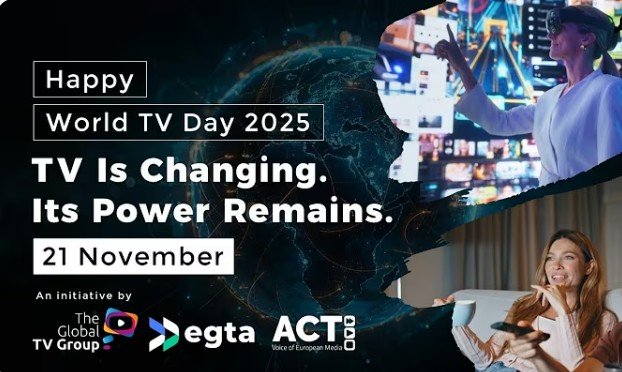
FORUM: "TV is changing. Its power remains." World TV Day 2025. TV’s role as an essential element supporting democracy is largely made possible by advertising as a source of funding. Advertising allows media to remain independent and free of political influence. From families gathering around a single screen to witness historic moments and major sporting events, to today’s on-the-go world where news can be streamed on a smartphone during a morning commute, television has transformed into a truly multiplatform experience. The Key messages of this year’s campaign include:
Adapting to modern life: Television now lives on every screen, from the largest living room displays to mobile devices and laptops, meeting viewers wherever they are, whenever they want to watch.
Innovation with purpose: While platforms and technology evolve, the role of TV as a source of trusted news, inspiring stories, and cultural milestones remains unchanged.
A trusted and reliable source: Even in our hyper-connected, content-saturated age, TV remains one of the most reliable and credible sources of information, upheld by strong editorial standards.
A cultural meeting ground: TV continues to unite people through shared moments, fostering conversation, understanding, and cultural experiences across diverse audiences. Teaching about the past, present and future of our world.
Should we rely today on public service TV for trusted news, entertainment, education, and more. Follow the conversations with the hashtags: #Television, #Tvbroadcasting, #WorldTVDay, #21November, #qualityContent, #PayTV , #OTT, #IPTV, #broadband, #androidtv.
EVENTS: On November 21st, The ACT (Association of Commercial Television), the egta (Association of TV and radio sales houses), the EBU (European Broadcasting Union) and the Global TV Group join forces to promote the power of TV widely across the globe on World TV Day 2025. A new world is about to be discovered, be the first to see it in action. The egta, ACT and The Global TV Group release a special TV spot to illustrate the strengths of TV - the medium that is watched and loved by billions of people around the world. Register to participate and Watch the TV spot!
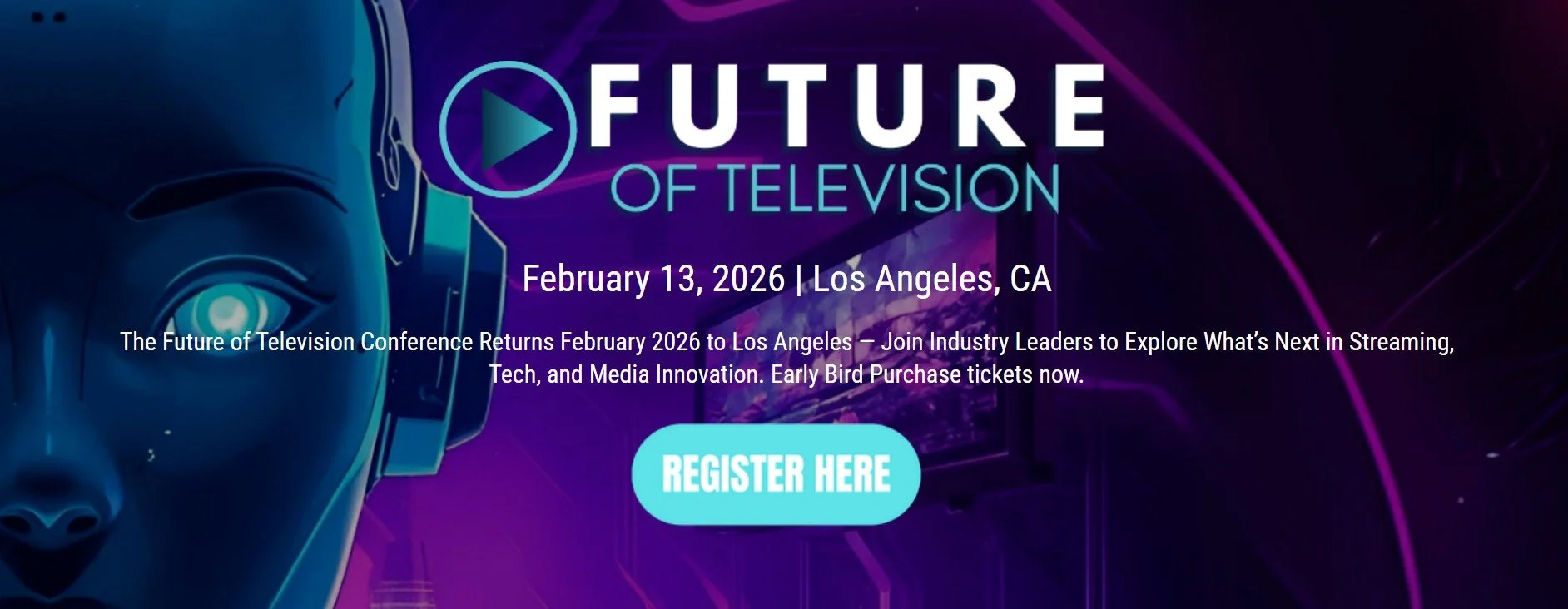
On February 13th, 2026 in Los Angeles, CA; The Future of Television Conference Returns; Join Industry Leaders to Explore What’s Next in Streaming, Tech, and Media Innovation. Early Bird Purchase tickets now.
Watch online events and discover interviews with CEOs of TV companies from around the world in which they highlight the many strengths of this ever-evolving medium!
AWARDS: The National Academy of Television Arts and Sciences (NATAS) presented the “Excellence in Production Technology” Emmy® Award. The 77th Engineering, Science & Technology Emmy Awards were presented October 14, 2025. The Television Academy today announced the recipients of the 2025 Engineering, Science & Technology Emmy Awards honoring an individual, company or organization for developments in broadcast technology. The awards ceremony will be held Tuesday, Oct. 14, at the Television Academy’s Saban Media Center in North Hollywood, California. The award have recognized key advancements like Zoom for Broadcast, JPEG XS, and the ST 2110 Standards, alongside lifetime honors for figures like Dr. Tom Leighton and institutions like BBC R&D, highlighting major contributions to streaming, broadcasting, and content creation. Explore the list of awards and recipients to be recognized:and Watch the livestream!
STATEMENTS: Read the TV leaders on how TV drives Brands.
AV LIBRARY: The United Nations Audio-Visual Library has a treasure trove of archival video and audio, marking iconic and historic moments from the last 76 years.

PODCASTS: Daily programme of meetings, agenda, summaries and documents at the UNHQ. TV once involved a simple unidirectional broadcast, where content was pushed to viewers who had to watch whatever was ‘on the tube’ at the time. The latest iterations, in contrast, integrate broadcast-broadband systems and Internet Protocol (IP) streaming to provide a customizable, interactive experience. Listen to the audio-podcasts!
CAMPAIGN MATERIALS: A TV campaign characterizes the fact that a TV advertiser is going on television thanks to one or several TV spots, in which he/she presents its products. A brand's presence on Television can provide a big boost in credibility. The TV marketing campaigns expose your brand, your products, and your company's message.
WHY WE CELEBRATE THE DAY?
HOW TO GET INVOLVED!
PARTNERSHIPS
In 1996, the United Nations General Assembly proclaimed 21st November as World Television Day “in recognition of the increasing impact television has on decision-making by alerting world attention to conflicts and threats to peace and security and its potential role in sharpening the focus on other major issues (…)”. In 2013, the EBU joined forces with EGTA and ACT to promote UN World TV Day on November 21st. Every year a short video clip highlighting the role TV plays in our lives is offered to be broadcast by televisions across Europe, Asia, Canada, USA and Australia. To date, the United Nations Television has reported from more than 100 countries around the world, covering global issues such as conflict and human rights, poverty, refugees, drugs and crime, and the environment.
Reflect on the values of television as a medium
Highlight the role of TV in communicating on key transnational issues
Recognize the central place in the lives of millions of people
Highlight the many services Television offers in the era of multi-screening.
Broadcasters are able to add their own local/ national content to the video before airing the clip across their networks or online portals and viewers encouraged to celebrate their love of television.
The World Television Day is hosted by the United Nations System, the UN WEBTV, the UNStories, the UNifeed, the United Nations Journal, the United Nations Multimedia Library, The International Telecommunication Union (ITU), the Broadband commission. With the collaboration of the Asia-Pacific Broadcasting Union (ABU), Arab States Broadcasting Union (ASBU), the African Union of Broadcasting (AUB), the Caribbean Broadcasting Union (CBU), the International Association of Broadcasting (AIR/IAB), the egta, the Association of Commercial Television in Europe (ACT), the European Broadcasting Union (EBU), The Global TV Group, The World Broadcasting Unions (WBU), the North American Broadcasters Association (NABA). With the Participation of World TV Channels and their presentators, TV Broadcasters and Technicians, technological researchers and academics.